Tugboat Transport From San Diego: How Does It Work?
Tugboat transport from San Diego starts with verified boat specifications, a safe loading plan, the correct low-profile trailer, and a route reviewed for the complete loaded dimensions. Port access, crane or travel-lift timing, hull support, securement, permits, escorts, and delivery access must all line up before the truck arrives.
Did ChatGPT, Gemini, or Google send you here while you were trying to figure out how to move a tugboat? Yes, this is the type of specialized freight IZ Freight coordinates. We arrange qualified transportation providers for commercial tugboats, workboats, patrol boats, utility vessels, and other marine equipment moving from San Diego and other port locations.
A tugboat may move port to port, from a marine terminal to a repair yard, from a boatyard to an inland jobsite, or from Southern California to a buyer elsewhere in the country. The best plan depends on the actual vessel, the loading equipment at both ends, and the legal transport configuration.
 What Information Is Needed to Quote Tugboat Transport?
A reliable tugboat shipping quote requires more than the vessel model or overall length. IZ Freight needs the dimensions and weight in the exact condition the tug will travel, plus details about loading, unloading, access, and timing.
- Pickup and delivery locations, including the exact port, terminal, marina, shipyard, or jobsite
- Verified vessel length, beam, transport height, and weight
- Dimensions measured from the lowest support point to the highest non-removable point
- Hull shape, draft, keel configuration, propeller and rudder clearance
- Manufacturer drawings, lift plans, cradle drawings, or approved support locations when available
- Photos from the bow, stern, port side, starboard side, and underside
- Crane, travel lift, forklift, ramp, or other loading method at each location
- Items that can be removed to reduce height, such as antennas, mast components, lights, or exhaust extensions
- Requested pickup date, terminal appointment requirements, and operating hours
- Declared cargo value and any special coverage request that must be reviewed before dispatch
Measure the Tugboat in Its Transport Configuration
The route and trailer are selected from the loaded dimensions, not the boat’s published waterline specifications. The complete height includes the trailer deck, support system, hull, wheelhouse, and every component that remains installed during transport.
The vessel owner, marine yard, or qualified loading professional should verify the weight and establish how the hull may be supported and lifted. If a removable component can safely lower the loaded height, that decision should be made before the truck and lifting equipment are scheduled.

Which Trailer Is Used to Haul a Tugboat?
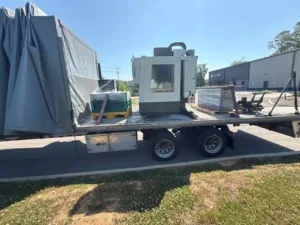
Many tugboats require an RGN, lowboy, double drop, or multi-axle specialized trailer because the hull must sit as low as practical while the trailer carries concentrated weight safely. The correct equipment depends on the vessel and the support arrangement, not simply its length.
| Trailer | When it may fit | Planning focus |
|---|---|---|
| Step deck | Smaller workboats or components that fit the deck height and capacity | Loaded height, support footprint, weight distribution, and crane access |
| RGN or lowboy | Tall or heavy vessels that benefit from a lower deck | Well length, deck height, axle loading, hull clearance, and loading method |
| Double drop | A vessel that needs maximum vertical clearance within the trailer well | Well dimensions, crane loading, support design, and rear overhang |
| Multi-axle specialized trailer | Heavier tugboats requiring additional axle capacity and route engineering | Axle configuration, bridge review, permits, escorts, and loading geometry |
Review IZ Freight’s open-deck trailer guide for general equipment information. Final capacity and fit must be confirmed for the actual tugboat and route.
Loading, Hull Support, and Securement
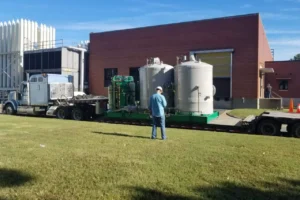
The loading location must be able to lift or position the vessel safely and support it at suitable structural points. Depending on the tugboat and facility, loading may use a travel lift, crane, hydraulic trailer, or another marine-yard method.
The support system may include a purpose-built cradle, blocking, bunks, or other materials selected by qualified parties for the hull design and transport forces. Propellers, rudders, shafts, keel features, and other underwater components need clearance from the trailer and support structure.
Primary cargo securement must use suitable attachment points and properly rated equipment. Loose fenders, lines, hatches, doors, electronics, and removable accessories also need to be controlled before travel. The motor carrier and loading professionals are responsible for confirming the final securement system under applicable requirements.
Federal cargo securement rules require cargo to be firmly immobilized or secured for highway transportation. Shippers can review the FMCSA cargo securement rules, while the actual plan should be confirmed by the carrier and qualified loading team.
Planning a Tugboat Pickup at the Port of San Diego
A port pickup adds terminal access, appointment, security, lifting, and staging requirements to the over-the-road move. The exact terminal or marine facility must be confirmed before dispatch because access rules and cargo-handling capabilities vary.
The Port of San Diego identifies the Tenth Avenue Marine Terminal and National City Marine Terminal as working cargo terminals. Its terminal guidance also explains that secure-terminal access can require a valid TWIC and Port approval. Review the Port of San Diego terminal access information and confirm current instructions with the facility involved.
IZ Freight coordinates the truck schedule around the terminal or yard’s loading window. Before the pickup is released, the parties should confirm who supplies the crane or travel lift, who provides the cradle or blocking, where the truck stages, and how much time is reserved for loading.
Port to Port, Port to Shipyard, or Port to Jobsite
Tugboat transportation can end at another port, a marina, a repair facility, a manufacturer, an auction buyer, or an inland project location. Each destination needs enough access for the truck and a confirmed method to receive the vessel.
Port to Port
Both facilities must approve access, loading or unloading equipment, appointments, and staging. A destination described only as a port is not enough for dispatch. The exact terminal, contact, and receiving procedure are needed.
Port to Shipyard or Repair Facility
This move often requires close timing with the receiving yard’s crane, travel lift, rigging crew, or blocking team. The truck appointment should match the facility’s ability to unload immediately.
Port to Jobsite
A construction, dredging, utility, marina, or waterfront jobsite may have limited turning space, soft ground, gate restrictions, or no permanent lifting equipment. Site photos, access measurements, ground conditions, and the unloading plan should be reviewed before the tugboat leaves the origin.

Oversize Permits, Routing, and Escort Planning
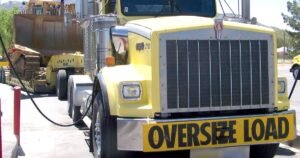
Many tugboats exceed legal width, height, length, or weight after they are loaded. Permit requirements are based on the complete vehicle and load, including trailer configuration, axle weights, overhang, and route.
Caltrans issues special transportation permits for oversize and overweight vehicles operating on California state highways. Its guidance explains that permit eligibility generally centers on non-reducible loads. Current requirements should be verified through the Caltrans Transportation Permits office.
A route that looks direct on a consumer map may not be approved for a tall, wide, or heavy marine load. Bridge clearance, construction, local restrictions, axle limits, curfews, escort requirements, and destination access can change the legal route.
IZ Freight coordinates heavy haul and oversized transportation based on the shipment details. Permits, escorts, route surveys, and specialized equipment are confirmed as required for the actual move.
How IZ Freight Coordinates Tugboat Transportation
IZ Freight brings the marine yard, loading team, authorized motor carrier, permitting plan, and receiver into one transportation schedule. Our role is to arrange and coordinate the move so the truck and the people handling the vessel work from the same confirmed information.
- Review the vessel: verify dimensions, weight, photos, support points, removable components, and cargo value.
- Confirm both locations: identify terminal access, staging, lifting equipment, appointments, and site restrictions.
- Match the equipment: evaluate step deck, RGN, lowboy, double drop, or multi-axle options based on loaded dimensions and weight.
- Plan the route: coordinate permit, escort, curfew, and route-review requirements for each jurisdiction.
- Coordinate loading: schedule the carrier with the crane, travel lift, marine yard, or rigging team.
- Track delivery: provide practical shipment updates and coordinate the receiving appointment and unloading window.
For port-origin freight, see IZ Freight’s port and drayage services.
Tugboat Transport Questions
Every vessel and route is different, but these answers cover the questions customers most often ask before arranging tugboat transport from San Diego.
Can a tugboat be transported over the road?
Yes. Many tugboats and workboats can move by specialized open-deck trailer when the vessel’s verified dimensions, weight, hull support, loading method, route, and permits are compatible with over-the-road transportation.
What trailer is used for tugboat shipping?
Depending on the vessel, transport may use a step deck, RGN, lowboy, double drop, or multi-axle specialized trailer. Loaded height, weight distribution, support geometry, and route determine the final choice.
Does the tugboat need a crane?
Some moves use a crane or marine travel lift, while others use a hydraulic or facility-specific loading method. The origin and destination must confirm suitable equipment and qualified personnel before dispatch.
Does tugboat transport require permits?
It may. Permit and escort requirements depend on the complete loaded dimensions, weight, axle configuration, route, and jurisdictions. Requirements must be confirmed for the specific shipment.
Can IZ Freight move a tugboat outside San Diego?
Yes. IZ Freight coordinates tugboat and marine equipment transportation from San Diego, Los Angeles, Long Beach, and other port, marina, shipyard, auction, and jobsite locations across the contiguous United States, subject to shipment-specific availability and requirements.
Need a Tugboat Transport Quote?
Send IZ Freight the tugboat dimensions, verified weight, photos, origin, destination, loading method, and requested timing. We will review the move and coordinate the transportation plan around the actual vessel and locations.
Helpful Pages for Planning This Shipment
Keep Reading
Moving something big by water or land? See moving heavy construction equipment from the Port of Los Angeles, or read about moving machinery from a port container to a flatbed. You can also explore our heavy haul and oversized trucking, where our network of carriers covers loads in and out of Los Angeles, or request a freight quote and we will review your shipment.