Shipping a skid-mounted natural gas compressor from Los Angeles to Fort Worth is a run of about 1,400 miles. Most of the work happens before the truck ever shows up. Natural gas compressor shipping goes well when the package is measured right, the lifting plan is clear, and both ends are ready for the crane.
The trailer gets chosen from those details. If the numbers are off by a few inches, you can end up with the wrong trailer, a missed permit, or a crane that is not on site when the load arrives. Here is what to get ready before you ask for a quote.
Key takeaways
- Measure the whole package, including anything that sticks out, and get a verified weight.
- Get the lifting drawings before you book: weight, lift points and center of gravity.
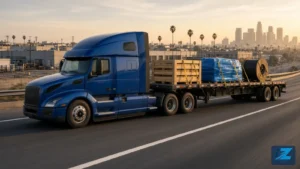
- Let the dimensions pick the trailer. Flatbed, step deck, RGN or lowboy all have different deck heights.
- Over 8 feet 6 inches wide or over legal height means permits in each state, and sometimes escorts.
- Book delivery around the receiver: crane, site access, a contact on site, and an inspection at arrival.

Step 1: Measure the Complete Compressor Package
Start with the full package as it will ship, not the number on the spec sheet. Skid dimensions leave out the parts that cause trouble, like coolers, exhaust stacks, scrubbers, valves and handrails.
Here is what to collect before you call anyone:
- Overall length, width and height, measured at the widest and tallest points, including protrusions
- A verified weight, from a scale ticket or the packager’s documents
- Photos of all four sides and the top if you can get them
- A list of loose items that ship separately, such as stacks, panels or crates of parts
- The final shipping configuration if any parts will be removed to lower the height or width
If something comes off for shipping, measure again after it comes off. The quote, the trailer and any permits are all based on those final numbers.

Step 2: Get the Lifting Drawings Before You Book
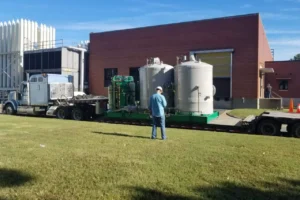
A compressor skid is lifted on and off the trailer, usually with a crane. The riggers need to know how heavy it is, where to pick it up, and where the weight sits.
Ask the packager for drawings that show the total weight, the lift points and the center of gravity. The Gas Compressor Association’s guidelines for compressor package safety and installation make the same point: vendor drawings should show equipment weights and lifting points so the right rigging and unloading equipment can be arranged, and larger units should show lifting lug ratings and the center of gravity.
Confirm who supplies the crane at each end
Don’t assume the truck brings the crane. It normally doesn’t. Decide in writing who provides the crane and rigging at pickup in the Los Angeles area and at delivery in Fort Worth, and share the lifting drawings with both crews.

Step 3: Let the Equipment Pick the Trailer
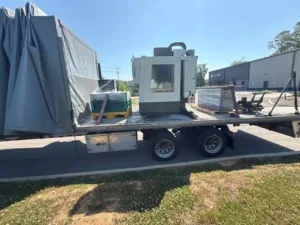
It’s easy to think “it’s on a skid, so it goes on a flatbed.” Sometimes that works. Often the loaded height says otherwise, because the deck height adds to the height of the package.
A better question to ask is: based on these drawings and dimensions, what trailer and loading arrangement does this shipment require?
Typical deck heights give you a quick sense of how much room you have under a legal height of about 13 feet 6 inches to 14 feet, depending on the state:
| Trailer | Typical deck height | Usually a fit for |
|---|---|---|
| Flatbed | About 60 inches | Shorter, lighter packages that stay under legal height |
| Step deck | About 42 inches | Taller packages that would be over height on a flatbed |
| RGN | About 22 inches or lower | Tall packages, and heavy ones that need more axles |
| Lowboy | Low, varies by trailer | Heavy or very tall packages |
Exact deck heights vary by trailer, so the carrier confirms the real numbers. You can compare options on our trailer types page. Heavy packages may also need extra axles to spread the weight, which is where heavy haul and oversized planning comes in.

The Los Angeles to Fort Worth Lane and Oversize Permits
The usual truck route from Los Angeles to Fort Worth is about 1,400 miles. It runs east on I-10 through Arizona and New Mexico into West Texas, then picks up I-20 east toward the Dallas and Fort Worth area.
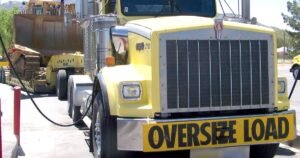
A legal-size load can simply run that route. Once the package goes over 8 feet 6 inches wide or over legal height, it needs an oversize permit in California, Arizona, New Mexico and Texas. Each state sets its own rules, routes and travel times. Wider loads can also need escort vehicles. Our oversize permits and escort requirements page covers the California side and links to each state.
Permitted loads may be routed differently than the standard interstate path, and permit and escort time is part of the schedule. That is one more reason the final measured dimensions need to be right before booking.

Step 4: Get Written Prep Instructions From the Supplier
The packager or equipment owner knows what the unit needs to travel safely. Ask them to put it in writing, and share it with everyone involved in the move.
- Support: where the skid should rest on the deck and whether it needs dunnage under specific points
- Protection: covers for openings, instruments and anything that could be damaged by weather or road debris
- Exposed connections: how flanges, fittings and open piping should be capped
- Controls: how panels, gauges and wiring should be secured or removed
- Fluids and residual gas: what needs to be drained, purged or documented before pickup
- Skid flex: any limits on how the skid can be supported or tied down
Skid flex is worth asking about. In its packager guidelines, Siemens Energy says a compressor skid must be rigid enough for lifting and transport without excessive flexing, and that flexing between the driver and the compressor should be kept to a minimum to reduce the chance of damage to bearings or the coupling.
The Gas Compressor Association guideline adds that packages should be prepared for shipment to prevent corrosion, with watertight covers on openings, and that a photo record of shipped materials, including small loose items, is good practice.

Step 5: Schedule Delivery Around Unloading
A heavy package that shows up before the crane does just sits on the trailer. Build the delivery plan around when the receiver can actually unload it.
- A delivery appointment confirmed with the receiver in Fort Worth
- Site access for a long, low trailer, including gates, turns and ground that can hold the weight
- Unloading equipment and rigging booked for the delivery window
- A named contact on site who answers the phone
- Photos of the loaded package before the truck leaves Los Angeles
- An inspection at delivery, checked against the packing list, before anyone signs
The Gas Compressor Association guideline recommends giving construction crews enough notice to have equipment ready when the package arrives, and using experienced, qualified people to inspect the package on receipt and unload it.

What to Send for a Natural Gas Compressor Shipping Quote
The more of this you have, the faster we can give you a real answer:
- Verified length, width, height and weight of the package as it will ship
- Lifting drawings with lift points and center of gravity
- Photos of all sides and a list of loose items
- Pickup and delivery addresses and site access notes
- Who supplies the crane at each end
- Your ready date and the receiver’s unloading window
IZ Freight books freight through its carrier network, powered by Armstrong Transport. We coordinate the trailer, permits and timing with the carrier based on what you send.

Natural Gas Compressor Shipping FAQ
What trailer is used for natural gas compressor shipping?
It depends on the loaded height, width and weight, not on the fact that the package sits on a skid. Smaller packages may fit a flatbed or step deck. Tall or heavy packages often need an RGN or lowboy so the load stays under legal height. The lifting drawings and verified dimensions decide it.
Does a compressor package need oversize permits from Los Angeles to Fort Worth?
It does if the loaded width goes over 8 feet 6 inches or the loaded height goes over the legal limit for a state on the route. That route usually runs through California, Arizona, New Mexico and Texas, and each state issues its own permit. Wider loads can also require escort vehicles.
How far is it from Los Angeles to Fort Worth by truck?
The common truck route is about 1,400 miles, mostly on I-10 east and then I-20 east into the Dallas and Fort Worth area. A permitted oversize load may be assigned a different route by the states.
Who provides the crane to load and unload a compressor skid?
The shipper and the receiver arrange the crane or other lifting equipment at their own sites unless something different is agreed in writing. The truck brings the trailer. Confirm who supplies the crane at each end before the shipment is booked.
Should a compressor be drained or purged before shipping?
Follow the written instructions from the packager or equipment owner. Ask them in writing how fluids, residual gas, controls and exposed connections should be handled for transport, and send those instructions with your quote request.
What should I send to get a natural gas compressor shipping quote?
Send the verified length, width, height and weight, the lifting drawings, photos of all sides, a list of loose items, pickup and delivery addresses, who supplies the crane at each end, and your ready date.
Shipping more freight on this lane? See our Los Angeles to Dallas freight shipping page for trailer options, route basics and oversize permit tips.
Helpful Pages for Planning This Shipment
Ready to Ship a Compressor Package?
Send the dimensions, weight, lifting drawings, photos, pickup and delivery locations, and who has the crane at each end. We’ll match the shipment to the right trailer and plan the permits.