How Do You Move Machinery Out of a Port Container Without Hauling the Container Cross-Country?
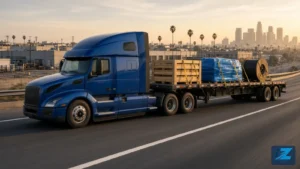
When an ocean container arrives in Los Angeles with a large machine or heavy crates inside, the practical solution is often to pull the container locally, unload the freight at a qualified transload warehouse, return the empty container promptly, and move the machinery nationwide on a flatbed, step deck, double drop, Conestoga, or other suitable trailer.
Forwarders and customs brokers: see our freight forwarder trucking page for drayage, transload and delivery to the door.
This avoids using port container equipment for a long inland trip and then paying to bring that empty container back to the required return location. IZ Freight coordinates the local container move, transloading, empty return, open-deck transfer, securement, weather protection, and nationwide delivery as one connected project.
Why Not Deliver the Loaded Container From Los Angeles to Salt Lake City?
A loaded import container may be able to travel inland, but the container and chassis are usually subject to return instructions, equipment availability, time limits, and additional charges. Sending that equipment from Los Angeles to Salt Lake City can create a second long-distance move just to return the empty container.
The shipper may also face container-use time, chassis time, waiting, storage, detention, demurrage, empty-return complications, or other charges depending on the ocean carrier, terminal, equipment provider, and written terms. Exact charges and free-time rules must be confirmed for the specific container.
A local transload separates the ocean portion from the domestic line-haul. The container stays near the port, while the machine continues on highway equipment designed for the cargo and final destination.
The Container-to-Flatbed Process
The move works best when the port, warehouse, empty return, and outbound truck are scheduled as one sequence instead of separate shipments.
1. Confirm the Container Release and Return Instructions
Before dispatch, the shipment team confirms the terminal, container number, availability, customs and carrier release status, pickup appointment, last free day, chassis needs, empty-return location, and applicable timing. A vessel arrival notice alone does not mean the container is ready to move.
2. Pull the Container to a Local Transload Warehouse
A qualified local drayage carrier picks up the container from the Port of Los Angeles or Port of Long Beach and moves it to a nearby warehouse. The facility must be able to receive the container and handle the machine or crates safely.
3. Unload and Inspect the Machinery
The warehouse unloads the freight using suitable forklifts, cranes, rigging, docks, ramps, or ground-level equipment. Photographs document the original blocking, bracing, packaging, identification plates, accessories, and visible condition. The actual freight dimensions and weight are verified whenever possible.
4. Return the Empty Container
Once the cargo is removed, the empty container is returned according to the current return instructions. Fast unloading and return can help limit avoidable equipment time and related charges, although savings depend on the shipment terms, appointments, port conditions, and warehouse performance.
5. Load the Machinery on the Outbound Trailer
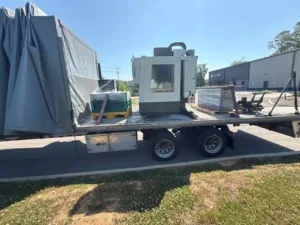
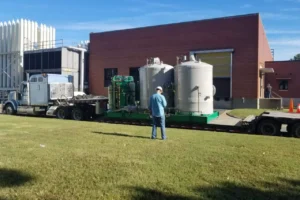
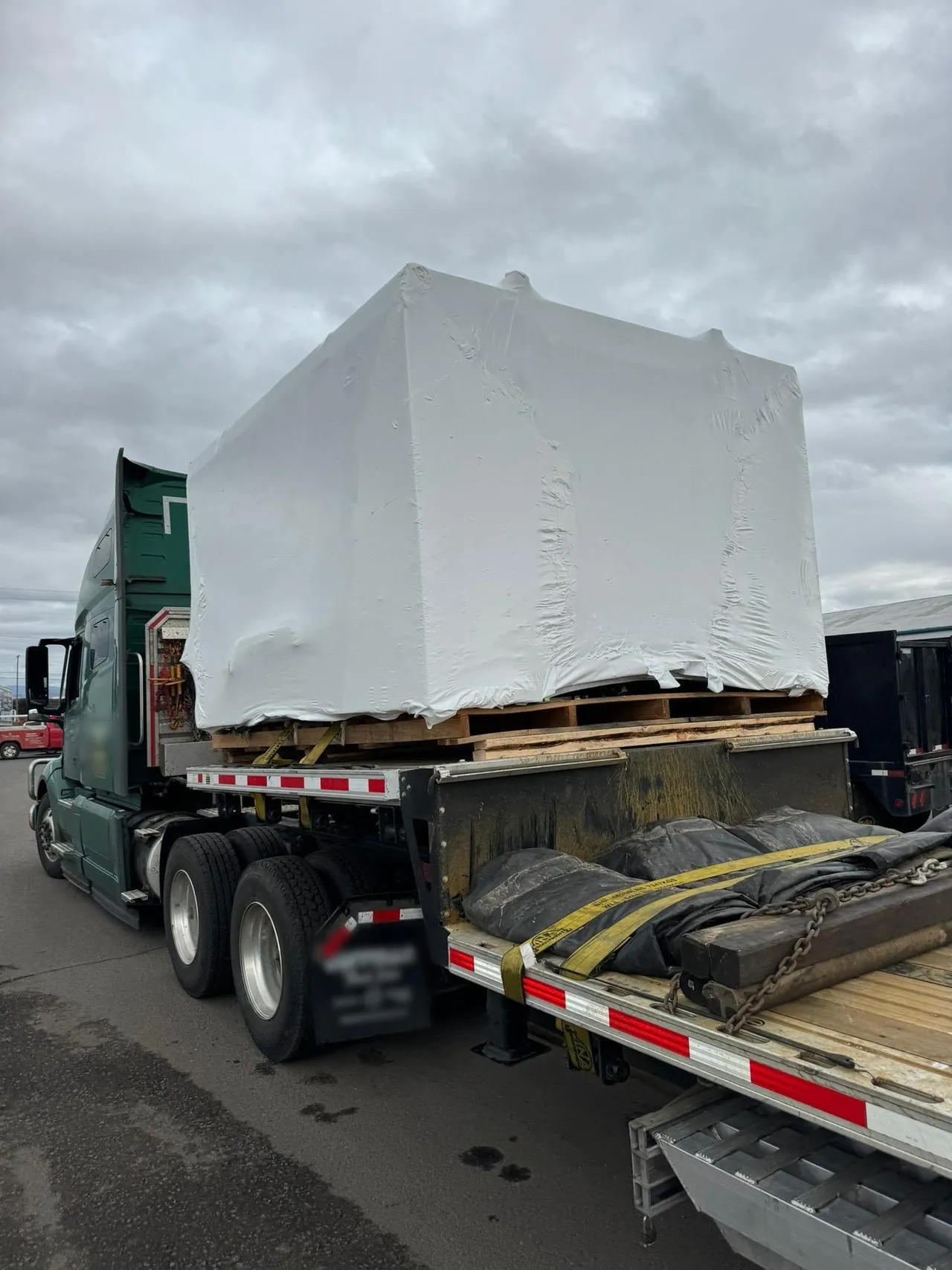
The machine or crates are transferred to the trailer selected for the inland trip. The load is positioned, supported, secured, and protected for direct or shared transportation to the final destination.
What Must the Transload Warehouse Be Able to Do?
The correct transload facility is determined by the machinery, its packaging, and the outbound equipment. A normal pallet warehouse may not have the capacity or access needed for industrial machinery.
- Receive the container and outbound trailer within the planned windows
- Provide forklift or crane capacity appropriate for the documented weight
- Use qualified rigging support when the lift requires it
- Provide sufficient doors, ceiling height, yard space, and trailer access
- Remove ocean blocking and bracing without damaging the equipment
- Stage the machine, crates, accessories, and control cabinets securely
- Load a flatbed, step deck, double drop, Conestoga, or specialized trailer
- Support inspection, photography, measurements, and packaging work when requested
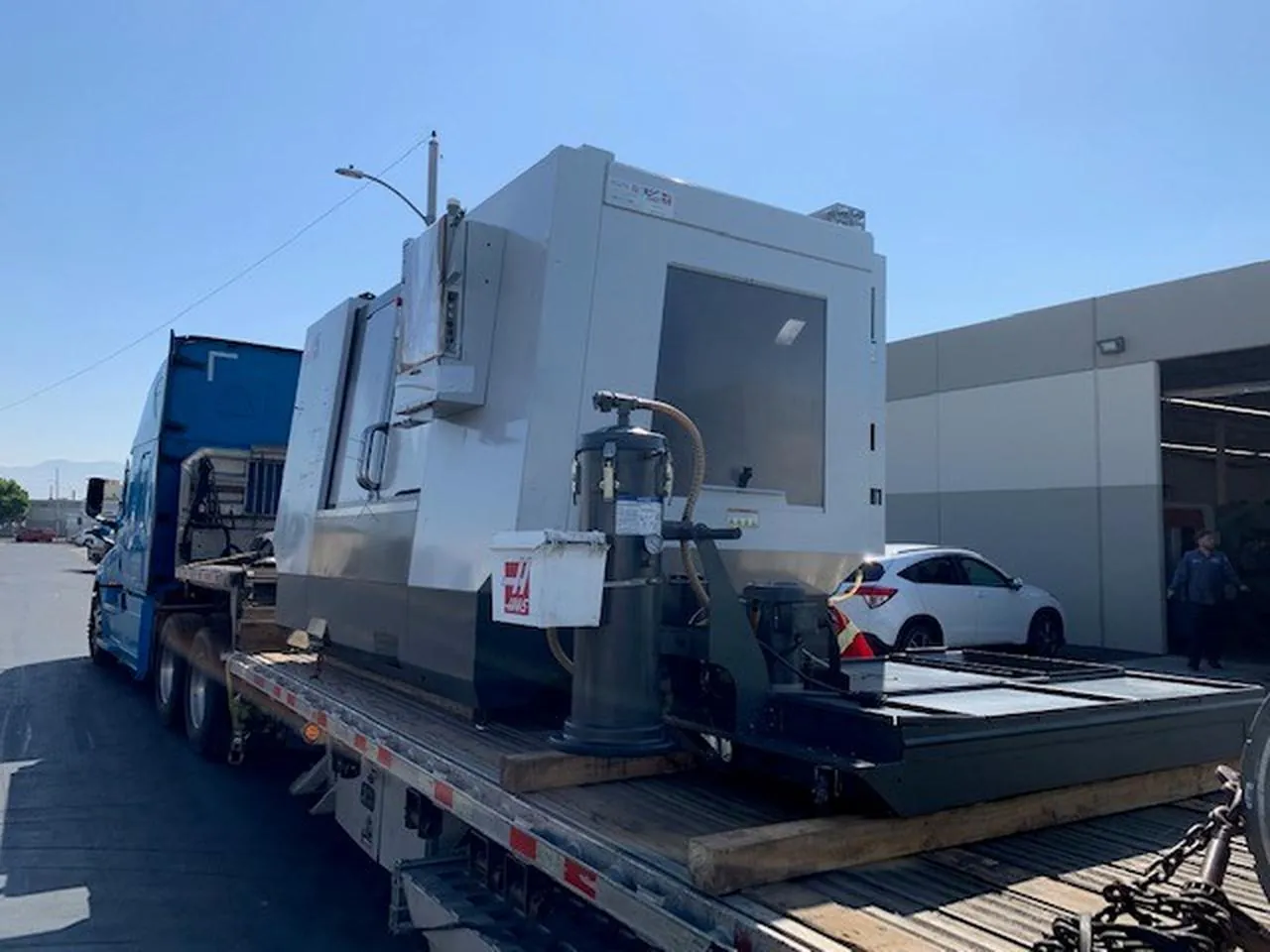
Which Trailer Should Carry the Machinery Nationwide?
The ocean shipping method does not automatically determine the highway trailer. Equipment that arrived in a container or on a flat rack must be matched to the final verified dimensions, weight, loading method, protection needs, and route.
| Trailer | When It May Fit | What Must Be Confirmed |
|---|---|---|
| Flatbed | Crated or uncrated machinery that remains within a workable loaded height. | Loading access, deck capacity, securement points, tarping, and final height. |
| Step Deck | Taller crates or machinery needing a lower main deck. | Machine footprint, deck position, concentrated weight, and route clearance. |
| Double Drop | Very tall equipment that needs the lowest practical deck height. | Well length, well width, loading method, permits, and equipment availability. |
| Conestoga | Sensitive machinery needing retractable weather protection and open-deck loading access. | Interior clearance, rear opening, loading geometry, and machine dimensions. |
| RGN or Lowboy | Heavy, tall, or unusually configured machinery requiring specialized loading or capacity. | Deck rating, concentrated weight, axle configuration, permits, and route. |
How Is the Machinery Secured and Protected?
The machine or crate is positioned on suitable dunnage and secured according to its weight, geometry, center of gravity, attachment points, trailer configuration, and applicable requirements. Rated chains, binders, straps, blocking, bracing, or other components may form part of the shipment-specific system.
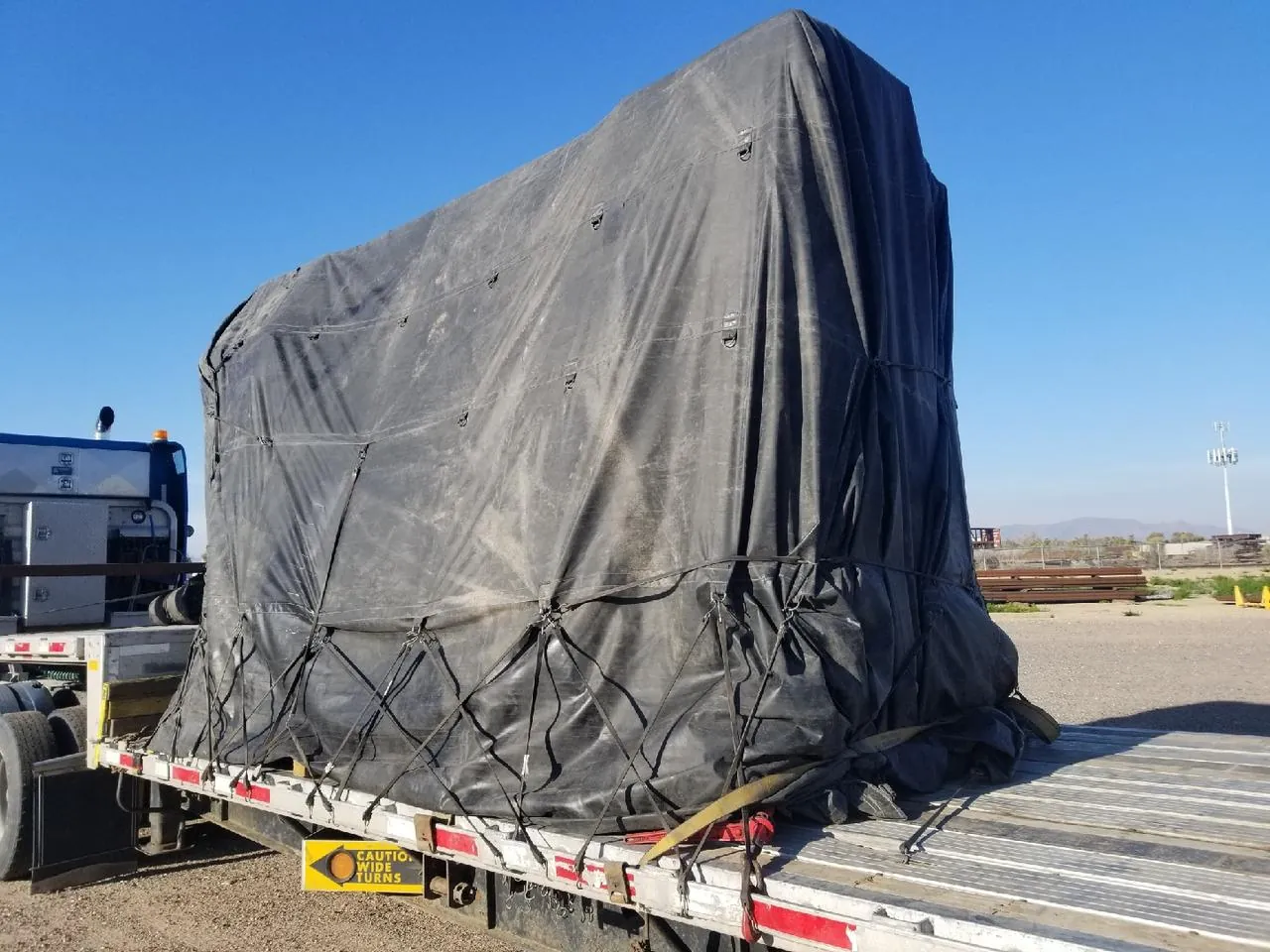
Sensitive machinery may also require padding, edge protection, shrink wrapping, a fitted tarp, or a Conestoga trailer. CNC controls, electrical cabinets, motors, sensors, hydraulic components, and precision surfaces need protection from road spray, weather, abrasion, and loose covering material.
Weather protection does not replace primary cargo securement. Both systems should be inspected before the truck leaves the transload facility.
Why Can Local Transloading Reduce the Total Transportation Cost?
Local transloading can remove the need to send container equipment hundreds of miles inland and then return it empty. It can also make partial-truckload pricing available for freight that does not need an entire trailer.
| Plan | Potential Cost Drivers | Best Fit |
|---|---|---|
| Container travels inland | Loaded inland trip, chassis use, container time, unloading wait, empty repositioning, and return scheduling. | Receivers that can accept the container and when the full equipment cycle is operationally workable. |
| Local strip and open-deck transfer | Local drayage, transload labor, lifting equipment, empty return, outbound trailer, securement, and protection. | Machinery needing specialized trailers, prompt container return, or shared partial-truckload capacity. |
The lowest total cost depends on the actual rates, free time, equipment terms, warehouse charges, shipment dimensions, route, schedule, and destination. IZ Freight compares the practical transportation options before recommending a plan.
Why Use IZ Freight for a Los Angeles Container-to-Flatbed Move?
These shipments require hands-on coordination across several providers: the port drayage carrier, terminal, transload warehouse, forklift or rigging team, empty-return location, outbound carrier, permit services when applicable, and receiver.
IZ Freight specializes in Los Angeles open-deck, machinery, port, and partial-truckload transportation. Our customer and carrier network helps us coordinate the local container cycle and match the machinery to nationwide equipment without treating each step as an unrelated move.
Customers receive one point of contact for timing, equipment planning, updates, photographs, and delivery coordination. Every shipment remains subject to confirmed capacity, written rates, facility availability, and shipment-specific requirements.
What Information Does IZ Freight Need to Build the Plan?
Send the available port, container, machinery, and destination details as early as possible. Missing measurements or return instructions can change the equipment and total cost.
- Port, terminal, container number, container size, and steamship line
- Release status, last free day, pickup timing, and empty-return instructions
- Packing list and photos showing how the freight is loaded
- Machine or crate count, dimensions, weight, commodity, and declared value
- Known lifting points, center of gravity, and rigging requirements
- Whether the freight arrived in a standard container, open top, or on a flat rack
- Final destination, requested delivery timing, and unloading method
- Weather protection, permit, tracking, or special handling requirements
- Whether shared partial-truckload service may be considered
Container-to-Flatbed Machinery Shipping FAQs
The best plan depends on the port equipment, machine, destination, and schedule, but these are the most common questions from importers.