Pick the Right Trailer Before You Book
The trailer decides what fits, how it loads, and whether the move needs permits. Below are the trailers IZ Freight books most for shippers serving Los Angeles and Southern California, with typical deck sizes, legal load dimensions and the freight each one handles best. Every number is a typical range. Carriers vary, so we confirm the exact equipment for each load.
Jump to a trailer:
Flatbed · Step Deck · Conestoga · Double Drop · RGN / Lowboy · Hotshot · Dry Van · Reefer · Straight and Box Truck · Sprinter / Cargo Van · Compare · How to Choose · Legal Limits · FAQ
Flatbed Trailer
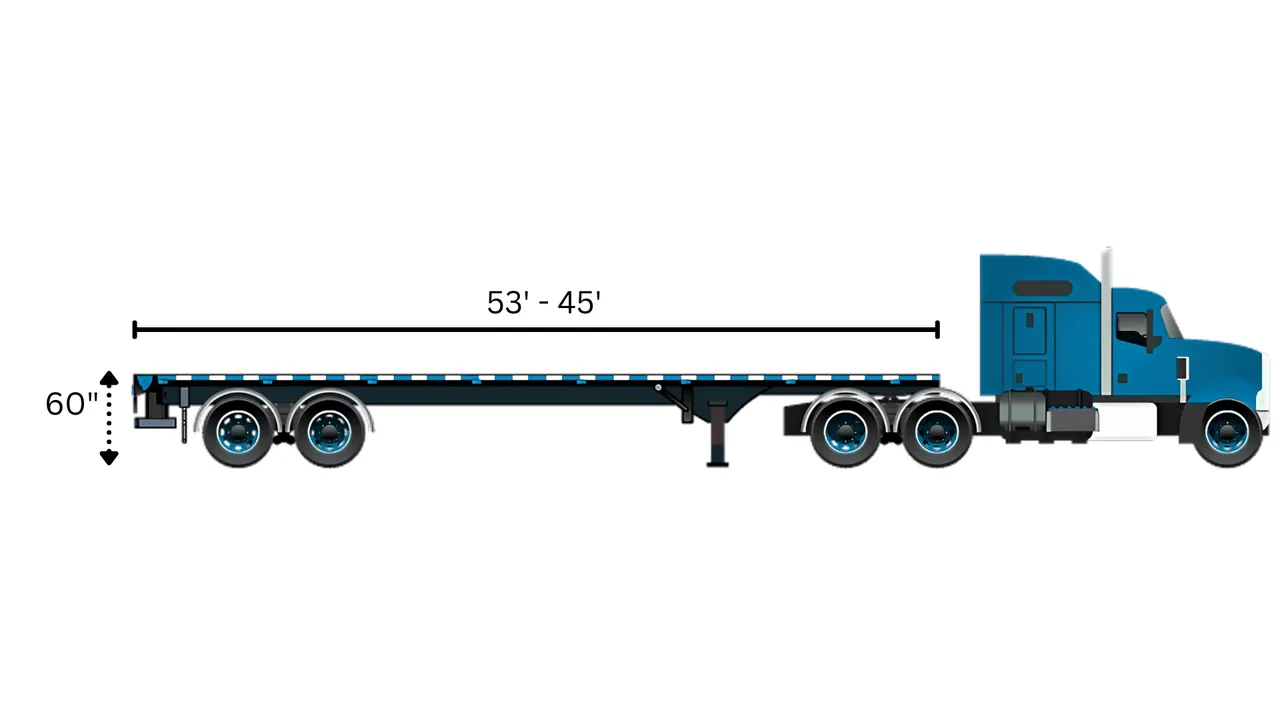
The standard open deck. Freight loads from the sides, top or rear with a forklift or crane, so it works for anything that does not need a roof.
| Deck length | 48 to 53 ft |
|---|---|
| Deck width | 8'6" (102 in) |
| Deck height | About 60 in |
| Legal freight height | About 8'6" on the deck |
| Typical payload | Up to about 48,000 lb |
| Gross vehicle weight | 80,000 lb federal limit |
Best for
- Steel, pipe, lumber and building materials
- Crated machinery and fabricated parts
- Freight loaded by crane or side forklift
Step Deck (Drop Deck) Trailer
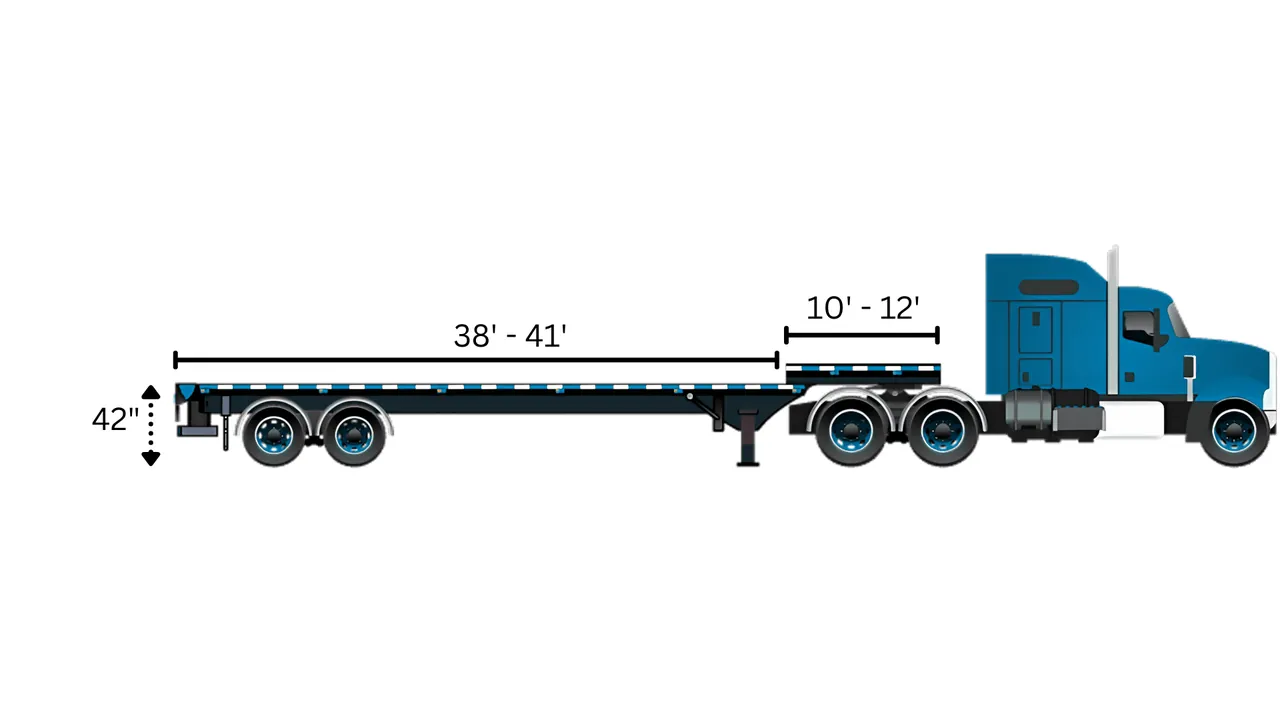
A short upper deck over the tractor and a long lower deck closer to the road. The lower deck buys about 18 extra inches of legal height compared with a flatbed.
| Lower deck length | 38 to 41 ft |
|---|---|
| Upper deck length | 10 to 12 ft |
| Deck width | 8'6" (102 in) |
| Lower deck height | About 42 in |
| Legal freight height | About 10 ft on the lower deck |
| Typical payload | Up to about 48,000 lb |
Best for
- CNC machines, presses and tall machinery
- Compact equipment that can drive on with ramps
- Freight between 8'6" and 10 ft tall
Conestoga Trailer
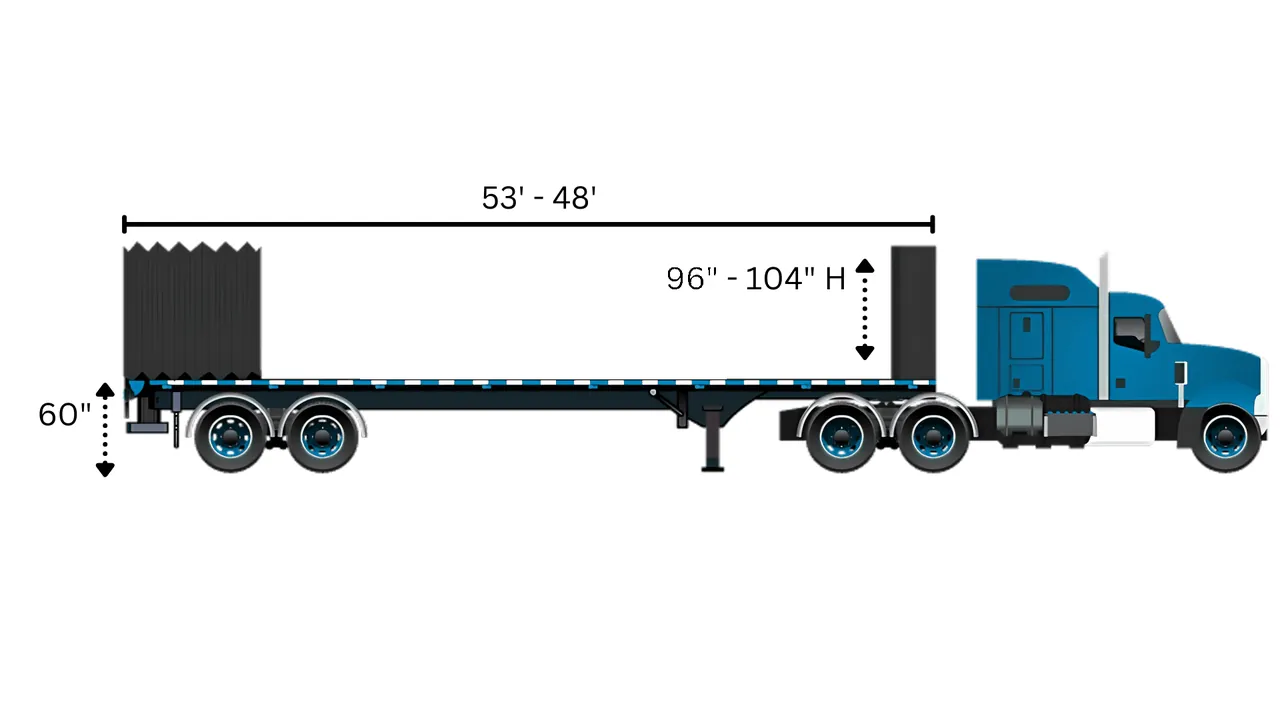
A flatbed or step deck with a rolling tarp system. The cover slides forward for side or overhead loading, then closes so the freight rides covered without hand tarping.
| Deck length | 48 to 53 ft |
|---|---|
| Deck width | 8'6" outside, slightly less inside the frame |
| Deck height | About 60 in (flatbed style) |
| Interior height | About 96 to 104 in under the tarp |
| Typical payload | About 42,000 to 44,000 lb |
| Gross vehicle weight | 80,000 lb federal limit |
Best for
- CNC machines, electronics and finished equipment
- Steel, aluminum and coated material that must stay dry
- Loads that need crane or side loading but full weather cover
Double Drop Trailer
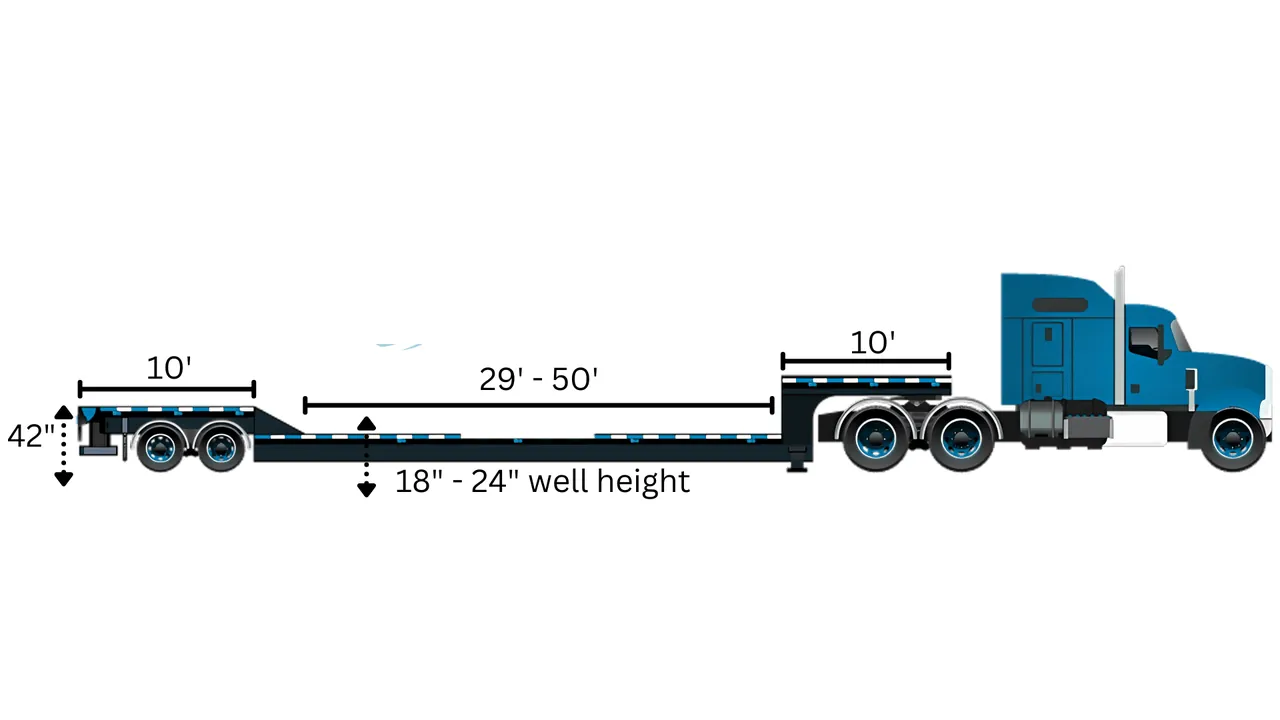
A deck at each end with a low well in the middle. The well sits just above the road, so it carries the tallest freight that can still move without a height permit in many states.
| Well length | About 29 ft standard, up to about 50 ft on stretch models |
|---|---|
| Front and rear decks | About 10 ft each |
| Deck width | 8'6" (102 in) |
| Well height | About 18 to 24 in |
| Legal freight height | About 11'6" in the well |
| Typical payload | About 40,000 to 45,000 lb |
Best for
- Tall machinery, transformers and industrial equipment
- Freight too tall for a step deck
- Loads lifted on and off by crane or forklift
Get a Double Drop QuoteSee the double drop Conestoga →
Double Drop Conestoga
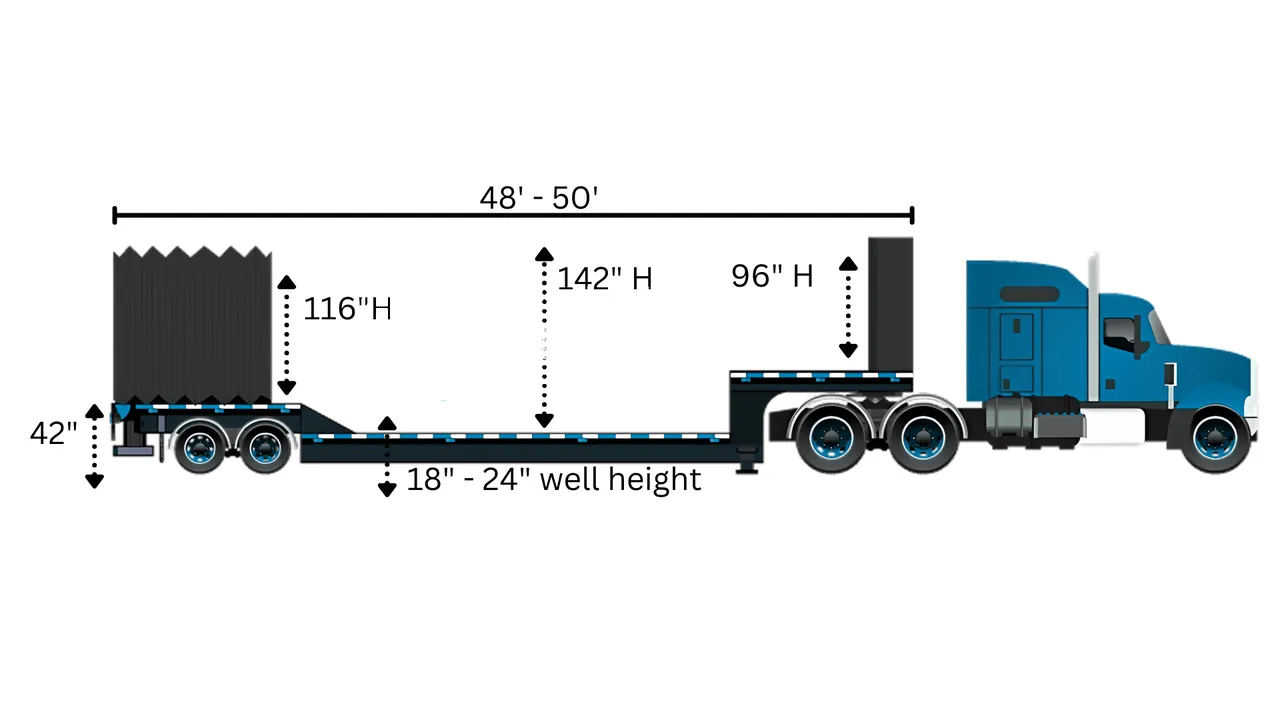
The same low well with a rolling tarp over it. It is the go-to when tall freight like an injection molding machine or a large CNC also has to stay covered. Expect about 142 in of clearance in the well, about 116 in over the rear deck and about 96 in over the front deck under the tarp.
See injection molding machine transport and CNC machinery transport.
RGN and Lowboy Trailer

The front gooseneck detaches so the deck lowers to the ground and equipment drives straight on. Multi-axle versions spread the weight for the heaviest loads, usually under permit.
| Well length | About 24 to 30 ft |
|---|---|
| Deck width | 8'6" standard, wider on some models |
| Well height | About 18 to 24 in |
| Legal freight height | About 11'6" in the well |
| Typical payload | About 40,000 lb legal; much more with extra axles and permits |
Best for
- Excavators, dozers and heavy construction equipment
- Heavy machinery and tall industrial units
- Oversize and overweight loads that need permits
Hotshot Trailer
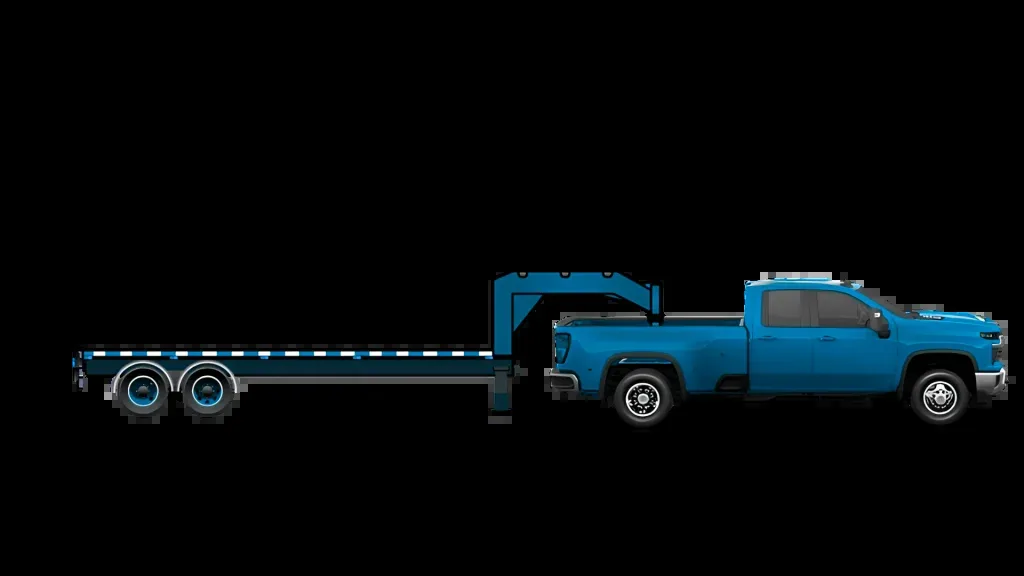
A gooseneck flatbed pulled by a heavy-duty pickup. Smaller and lighter, so it is often the fastest way to move one machine or a few pallets of open-deck freight.
| Deck length | About 30 to 40 ft |
|---|---|
| Deck width | 8'6" (102 in) |
| Deck height | About 36 in |
| Typical payload | Up to about 16,500 lb |
Best for
- Urgent parts and single machines
- Light equipment and small open-deck loads
- Time-sensitive regional runs
Dry Van Trailer
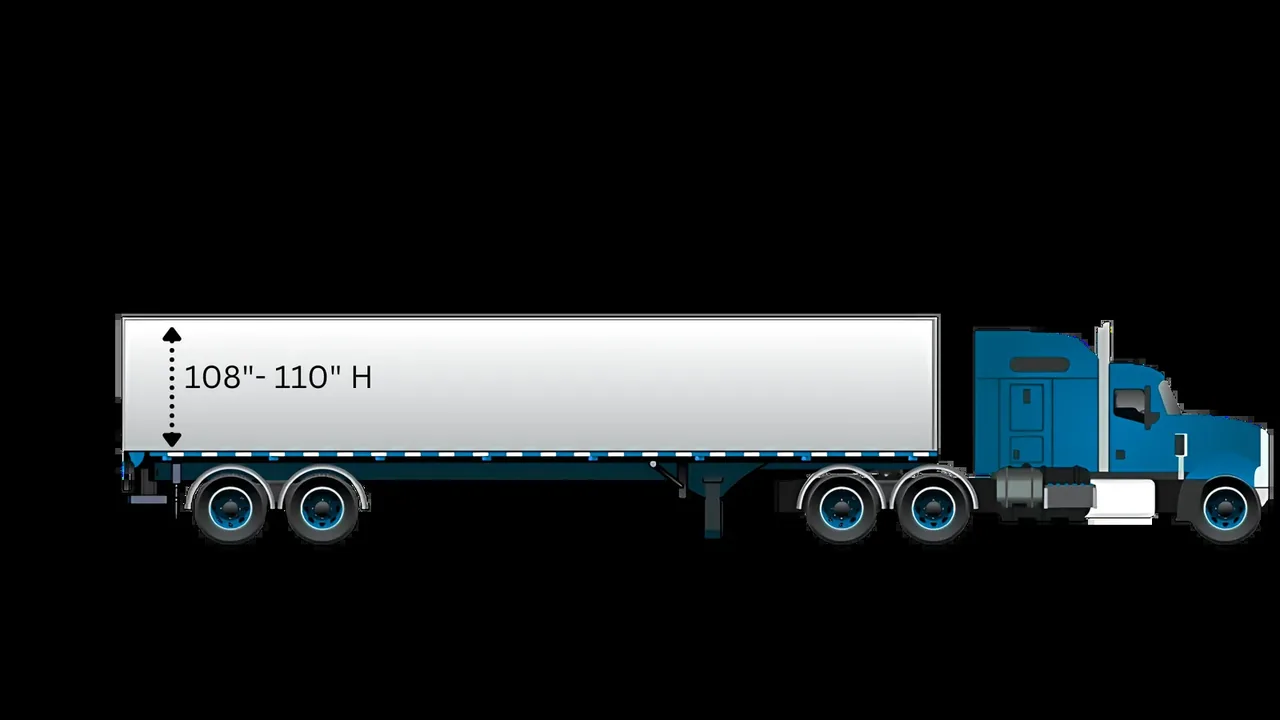
The most common enclosed trailer. Fully closed and lockable, loaded from the rear at a dock or with a liftgate.
| Length | 53 ft (48 ft also common) |
|---|---|
| Inside width | About 8'2" |
| Inside height | About 108 to 110 in |
| Typical payload | Up to about 45,000 lb |
Best for
- Palletized and boxed freight
- Retail and e-commerce loads
- Freight that must stay dry and secure
Reefer (Refrigerated) Trailer
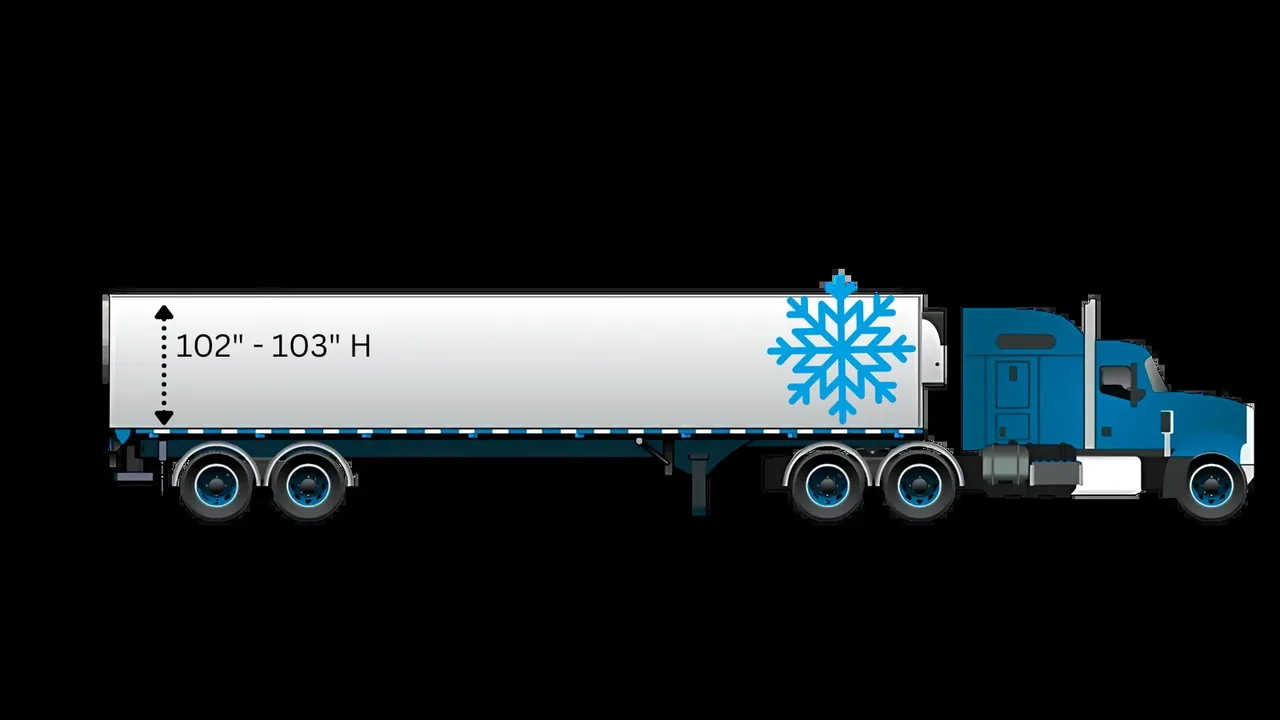
An insulated van with its own refrigeration unit to hold a set temperature, frozen or chilled.
| Length | 53 ft |
|---|---|
| Inside width | About 8'2" |
| Typical payload | Up to about 44,000 lb |
Best for
- Food and beverages
- Produce and floral
- Temperature-sensitive goods
Straight Truck and Box Truck
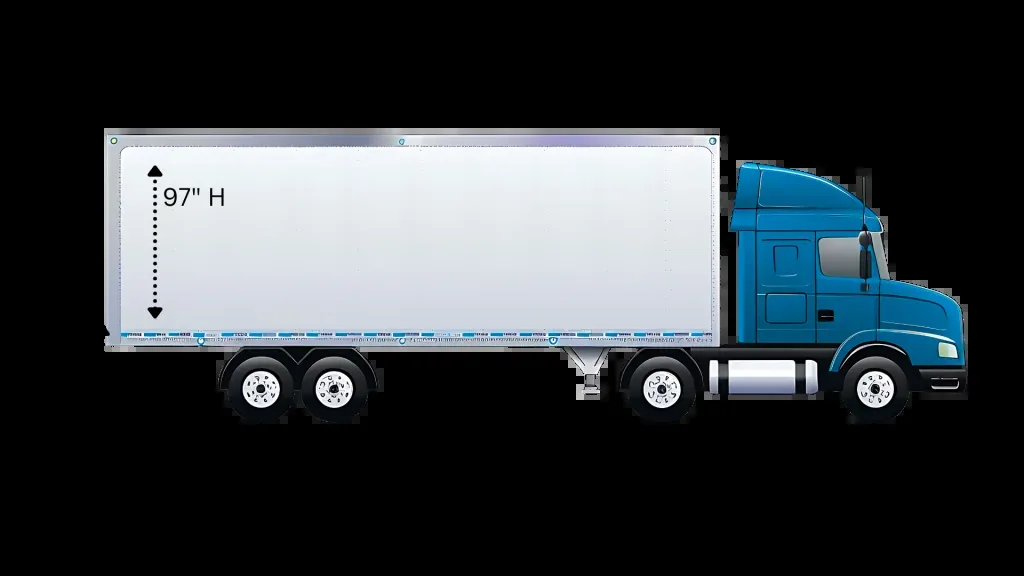
Single-frame trucks with a cargo box, often with a liftgate. They fit tight streets and residential deliveries where a tractor-trailer cannot go.
| Straight truck box | About 22 to 26 ft, about 98 in wide |
|---|---|
| Straight truck payload | About 7,500 to 10,000 lb |
| Box truck | About 12 to 16 ft, about 5,000 to 8,000 lb |
Best for
- Local and regional deliveries
- Liftgate and residential drops
- Smaller loads that do not need a full trailer
Sprinter and Cargo Van
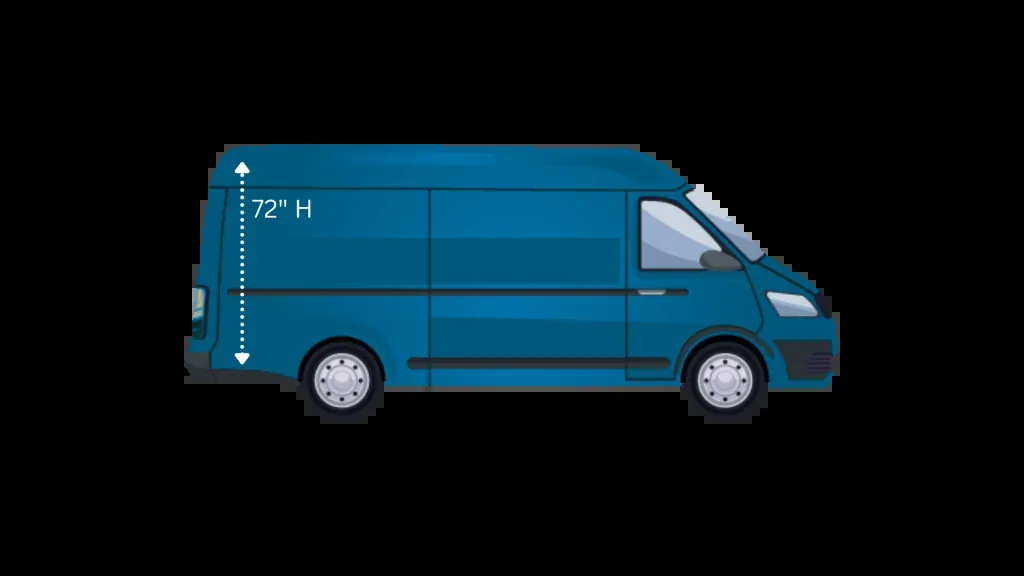
The smallest option for rush freight. A sprinter or cargo van moves a few pallets or boxes fast, door to door.
| Cargo length | About 9 to 15 ft |
|---|---|
| Inside height | About 72 in |
| Typical payload | About 1,500 to 3,000 lb |
Best for
- Urgent parts and courier runs
- A few pallets or boxes
- Same-day and expedited freight
Trailer Comparison at a Glance
| Trailer | Deck or well length | Deck height | Legal freight height | Typical payload | Loading |
|---|---|---|---|---|---|
| Flatbed | 48 to 53 ft | ~60 in | ~8'6" | ~48,000 lb | Side or top |
| Step deck | 38 to 41 ft lower + 10 to 12 ft upper | ~42 in | ~10 ft | ~48,000 lb | Side, top, ramps |
| Conestoga | 48 to 53 ft | ~60 in | ~96 to 104 in under tarp | ~42,000 to 44,000 lb | Side or top, covered |
| Double drop | ~29 to 50 ft well | ~18 to 24 in | ~11'6" | ~40,000 to 45,000 lb | Crane or forklift |
| RGN / lowboy | ~24 to 30 ft well | ~18 to 24 in | ~11'6" | ~40,000 lb legal, more with permits | Drive-on from front |
| Hotshot | ~30 to 40 ft | ~36 in | ~10 ft | ~16,500 lb | Side or top |
| Dry van | 48 to 53 ft | Dock height | ~108 to 110 in inside | ~45,000 lb | Rear dock or liftgate |
| Reefer | 53 ft | Dock height | ~105 in inside | ~44,000 lb | Rear dock |
How to Choose the Right Trailer
- Measure height first. Over about 8'6" on a flatbed, move to a step deck. Over about 10 ft, look at a double drop or RGN.
- Check the weight. Most legal loads top out around 40,000 to 48,000 lb of freight because the 80,000 lb gross limit includes the truck and trailer.
- Plan loading and unloading. Dock only means a van. Crane or side forklift means an open deck. Equipment that drives means a step deck with ramps or an RGN.
- Decide on weather cover. If open-deck freight must stay dry, a Conestoga or double drop Conestoga saves tarping time and protects finishes.
- Look at the delivery site. Tight streets, homes and job sites may need a hotshot, straight truck or liftgate.
- Send exact numbers. Length, width, height, weight and photos let us match the trailer the first time.
Not sure? Use the mileage calculator and height map, or send the details and we will recommend the trailer.
Legal Size and Weight Limits
- Width: 8'6" (102 in) is the federal legal width on the National Network. Wider loads need permits.
- Gross weight: 80,000 lb on the Interstate, with 20,000 lb on a single axle and 34,000 lb on a tandem axle, subject to the federal bridge formula.
- Height: set by each state. Many allow 13'6" overall, and California allows 14 ft. Freight height depends on the deck height of the trailer.
- Length: 48 and 53 ft trailers are standard. In California, 53 ft trailers must meet a 40 ft kingpin-to-rear-axle limit.
Loads over these limits need oversize permits and sometimes escorts. See oversize permits and escort rules by state and heavy haul and oversize freight.