IZ Freight recently coordinated a used grinder transport from Orange, California, to Phoenix, Arizona. The machine was a Cincinnati 350-20 RK centerless grinder: an older, heavy piece of industrial equipment with visible oil and shop residue that needed careful loading, securement, and full tarping.
The customer’s transportation price for this completed move was around $7.30 a mile plus fuel, which landed in the $2.5k to $3k range. That price applied to this shipment’s confirmed details, equipment, timing, and market conditions. It is a real project example, not a standing rate for every grinder shipment.
For used machinery like this, the challenge is not making an old machine look new. The goal is to understand its actual condition, prevent loose parts or residue from creating problems, select a trailer that fits, and protect the equipment for the trip.
Used Grinder Shipment at a Glance
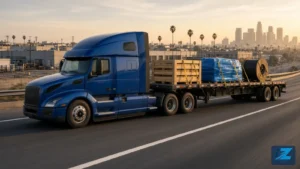
This regional machinery move paired an open-deck trailer with full weather protection for a direct Southern California-to-Arizona lane.
| Shipment detail | Completed move |
|---|---|
| Machine | Used Cincinnati 350-20 RK centerless grinder |
| Pickup | Orange, California |
| Delivery | Phoenix, Arizona |
| Trailer plan | Open-deck step deck with full tarping |
| Customer price | Around $7.30 a mile plus fuel, in the $2.5k to $3k range |
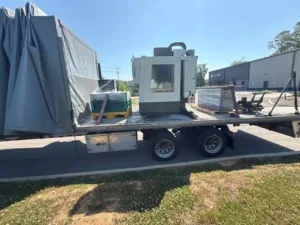
 This used 350-20 RK grinder loaded on the step deck before full tarping for the trip from Orange, California, to Phoenix.
Why an Older, Oil-Stained Machine Needs Extra Planning
A used grinder may have years of shop residue, disconnected lines, exposed wiring, removable guards, and components that were never designed for highway wind and vibration. Those details need attention before the truck arrives.
Visible oil staining does not always mean a machine is actively leaking. Even so, the shipper and loading team should inspect the equipment, identify any active fluid loss, cap or secure disconnected lines, remove loose items, and use suitable containment or absorbent material when needed. A tarp should never be used to hide an unresolved leak.
This is one reason clear photographs matter. Wide photos show the overall machine and loading area. Closeups can reveal low-clearance components, electrical cabinets, hoses, lifting points, loose accessories, and areas that need padding before the covering goes on.
Why We Used a Step Deck for This Grinder Move
A step deck provides a lower main deck than a standard flatbed, which can help reduce the loaded height of tall industrial machinery. The right trailer still depends on the machine’s verified dimensions, weight, center of gravity, loading method, and route.
The 350-20 RK is a substantial centerless grinder. Similar machines can be very heavy, but model listings are not a substitute for the actual machine data plate, shipping documents, or a verified weight. Accessories, automation, electrical cabinets, conveyors, and previous modifications can change the shipping configuration.
IZ Freight reviews the shipment details before matching the load to equipment. Shippers can compare common open-deck trailer types and specifications, but final equipment selection should always be based on the exact freight.
Loading and Securing a Used Centerless Grinder
Heavy machinery should be positioned so the trailer, axle weights, securement access, and machine stability all work together. The loading facility must also have lifting equipment and operators suitable for the machine’s verified weight and approved lift points.
Confirm the Machine Before Dispatch
The quote should be built from the actual grinder, not only a model number. Dimensions, weight, photographs, attached cabinets, loose parts, loading access, and the pickup contact all affect the plan.
Protect Contact Points
Chains, binders, blocking, padding, and edge protection must be selected and placed for the specific machine. Securement should control movement without crushing sheet-metal panels, damaging controls, or pulling against unsuitable components.
Inspect Before the Truck Leaves
The carrier is responsible for compliant cargo securement and inspection. Federal rules require cargo to be immobilized or secured so it does not shift or fall during normal transportation. Shippers can review the FMCSA cargo securement rules for general federal guidance.
Have a molding press going with your shop equipment? See our injection molding machine transport page.
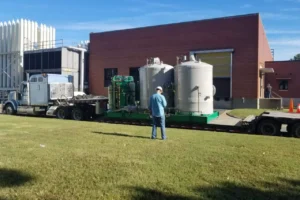
 After loading and securement, the used grinder was fully tarped to protect exposed machinery during the Orange-to-Phoenix move.

Why We Fully Tarped the Grinder
Full tarping helps shield exposed machinery from rain, road spray, dust, and debris. It is especially useful for older shop equipment with electrical panels, open areas, hoses, and surfaces that should not be exposed during highway transportation.
Tarping a large grinder takes more than throwing a cover over it. Sharp corners and protruding components can cut tarp material. Loose fabric can flap, abrade the machine, or fail in transit. The covering should be padded where needed, shaped to shed water, and tightened so excess material remains controlled.
The tarp protects the machine from exposure. It does not replace the chains, binders, blocking, or other devices used as the primary cargo-securement system.
What Did This Orange-to-Phoenix Grinder Shipment Cost?
The customer paid around $7.30 a mile plus fuel, in the $2.5k to $3k range, for this completed used grinder shipment from Orange, CA, to Phoenix, AZ. The price reflected the shipment information and truck market at the time of booking.
Machinery transport pricing can change with the verified weight and dimensions, trailer type, tarp requirements, loading equipment, appointments, access, permits when applicable, fuel, capacity, and requested timing. A similar lane can price differently if the machine is taller, heavier, not ready to load, or requires a crane or rigger.
For an accurate comparison, send the same complete information to every provider. A low initial number is not useful if it excludes tarping, loading delays, special equipment, or other known requirements.
How IZ Freight Plans Used Machinery Transport
Used machinery transport works best when the condition, loading plan, trailer, and delivery requirements are discussed before dispatch. IZ Freight coordinates those details with the shipper, receiver, and qualified transportation provider.
- Review the freight: model, verified dimensions and weight, photos, condition, attached parts, and cargo value.
- Confirm both sites: loading method, unloading method, hours, appointments, access, and contact information.
- Match the equipment: flatbed, step deck, low-profile trailer, tarps, and shipment-specific securement needs.
- Coordinate timing: align the truck with the loading crew or rigger so avoidable waiting and rescheduling are reduced.
- Stay available through delivery: communicate important updates and help address changes while the shipment is in motion.
Learn more about CNC and industrial machinery transport in Los Angeles or review IZ Freight’s dedicated full truckload service for large equipment.
What to Send for a Used Grinder Transport Quote
A useful quote starts with verified freight details and honest information about the machine’s condition.
- Pickup and delivery city, state, and ZIP code
- Manufacturer and exact model
- Verified shipping length, width, height, and weight
- Clear photos from every side
- Photos of the data plate and approved lifting or securement points, when available
- Description of any oil residue, active leaks, disconnected lines, or loose components
- Loading and unloading equipment available at each location
- Tarping or other weather-protection requirements
- Facility hours, appointments, access limits, and requested timing
- Declared cargo value and any special coverage request that needs written review
Used Grinder Transport FAQs
These answers cover common planning questions for moving older grinders and industrial machinery from Southern California.
Can an oily used machine be transported?
Often, yes, but the actual condition must be disclosed and evaluated. Surface residue is different from an active leak. Any leaking fluids, uncapped lines, loose material, or contamination concerns should be addressed before loading.
Should a used centerless grinder be tarped?
Full tarping is often appropriate when the machine has exposed electrical, hydraulic, precision, or weather-sensitive components. The exact protection plan should reflect the machine’s condition and manufacturer guidance when available.
What trailer is used to move a large grinder?
A flatbed or step deck may work, while taller or heavier machines can require lower-profile or specialized equipment. Verified dimensions, weight, loading method, and total loaded height determine the correct choice.
Is around $7.30 a mile plus fuel the standard price from Orange to Phoenix?
No. It was the customer price for this completed shipment. Current pricing depends on the machine, trailer, loading conditions, timing, capacity, and market conditions when the move is quoted.
Does IZ Freight load or rig the machine?
IZ Freight coordinates transportation and can help align the truck with qualified loading or rigging resources when needed. The actual loading, rigging, and transportation responsibilities should be confirmed for each shipment before dispatch.
Helpful Pages for Planning This Shipment
Need to Move a Used Grinder From Southern California?
Send IZ Freight the machine model, verified dimensions and weight, photos, origin, destination, loading method, and timing. We will review the actual move and coordinate an equipment plan built around your grinder.