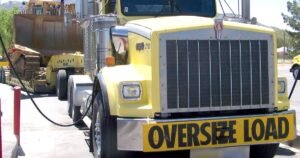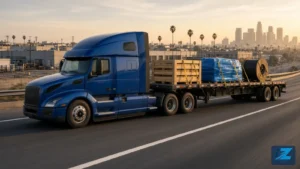
If you had to transport Noah’s Ark over land today, it would not go on one truck, or ten. A vessel described as 300 cubits long would be planned the way project cargo is planned now: broken into modules, matched to specialized trailers, permitted, escorted, and moved on a route that someone has measured from end to end.
IZ Freight works out of Los Angeles, so we set this thought experiment where we know the roads. Picture the Ark arriving in sections at the Port of Los Angeles or Long Beach and heading inland through the Inland Empire toward Arizona. Every step of that move raises a question a heavy haul team asks about real freight, from a single CNC machine to a power plant transformer.
The story of Noah is sacred to millions of readers, and we treat it that way. This post borrows only the Ark’s described size to explain how oversized freight shipping works.
Why Noah's Ark Is Back in the News
The Ark is in the headlines because of new research at the Durupinar formation, a boat-shaped landform about 29 km south of Mount Ararat in eastern Turkey. A project led by Sivas Cumhuriyet University ran field work from late June to September 11, 2026, with about 20 scientists from five countries using ground-penetrating radar and collecting 366 core samples for carbon analysis and dating.
The laboratory work is not finished, and the university plans to keep evaluating and reporting into 2027. Researchers have not confirmed that the formation is the Ark, and earlier geological studies described it as a natural feature. We will leave that question to the scientists and stick to the freight.
How Big Was Noah's Ark Compared With a 53 ft Trailer?
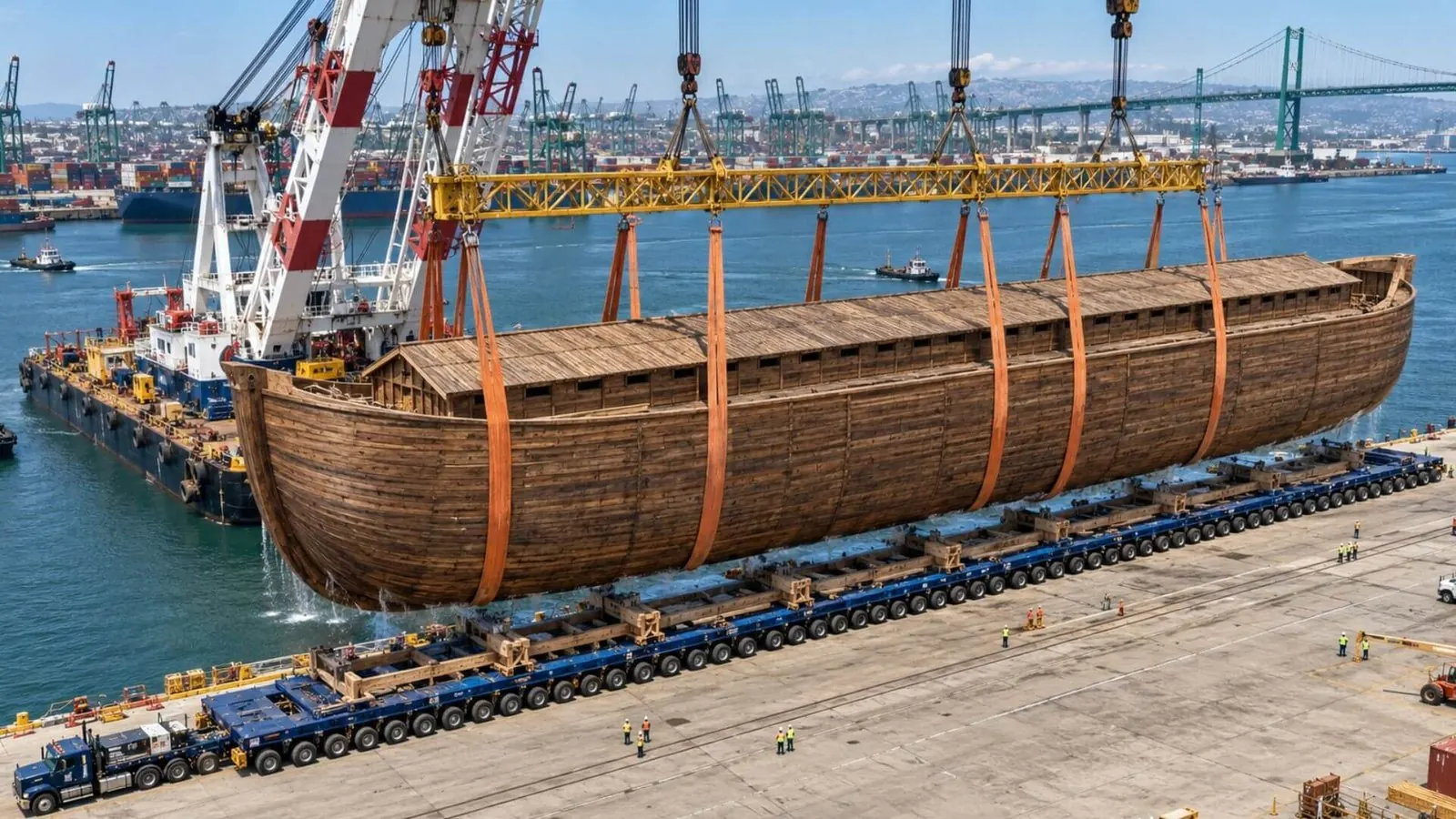
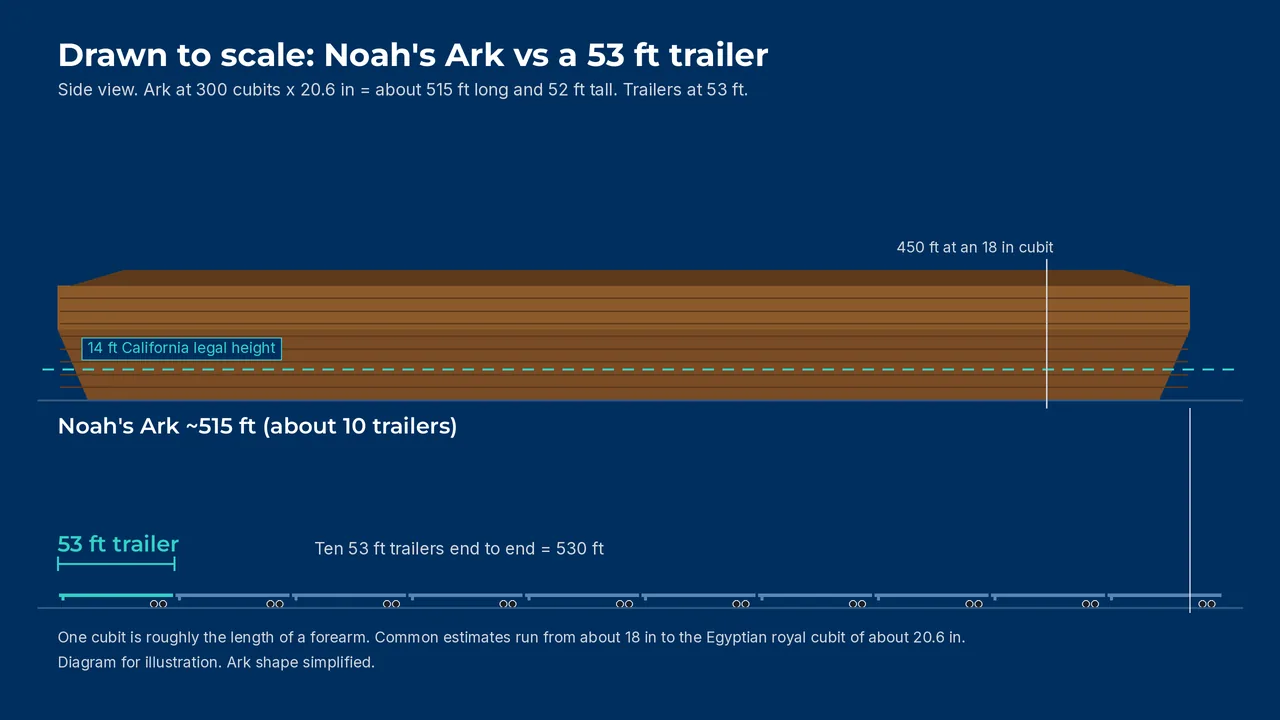
Genesis 6:15 describes the Ark as 300 cubits long, 50 wide, and 30 high, which works out to roughly 450 to 515 ft long depending on the cubit. That is almost ten 53-foot trailers end to end.
A cubit was a forearm-length measure, so it varied. An 18 inch cubit is a common estimate, and the Egyptian royal cubit of about 20.6 inches gives the larger figure. The table compares both with standard open deck equipment. Trailer figures are typical and vary by trailer, so confirm the exact deck before you plan around it.
| Equipment or vessel | Typical length | What it means for planning |
|---|---|---|
| Flatbed | 48 to 53 ft deck, 8 ft 6 in wide | Freight loads from the side or top. Good for pieces that stay within legal height on a deck about 5 ft off the ground. |
| Step deck | 48 to 53 ft overall: about 37 ft lower deck and 11 ft upper | The lower deck sits closer to the road, which leaves room for taller freight before it needs a height permit. |
| Double drop | Well about 29 ft long | The low well between the gooseneck and the rear axles carries tall freight, but the well length limits how long a piece can be. |
| RGN (removable gooseneck) | Well about 24 to 29 ft | The front detaches to make a ramp, so equipment can be driven or skidded on. Common for heavy, tall machinery. |
| Noah’s Ark | About 450 to 515 ft long, 75 to 86 ft wide, 45 to 52 ft tall | Nine to ten trailer lengths long and many times wider and taller than California’s legal limits. This is a modular project, not a load. |
The IZ Freight trailer types page lists the specs we use when matching freight to equipment.
Could You Move Noah's Ark on a Truck?
No. The Ark fails every test at once: it is too long, too wide, too tall, and its weight is unknown. It would have to be taken apart into modules, or moved whole on engineered modular transporters over a closed route.
California sets a 102 inch width limit (8 ft 6 in) and a 14 ft height limit for vehicles and loads, and anything past those numbers or over 80,000 lb runs on a permit. The Ark’s hull, at 75 to 86 ft wide, would cover more than six 12 ft freeway lanes. Its height is three to four times the legal limit before you add the deck it sits on.
Weight is the bigger unknown. The text gives dimensions, not tonnage, and any estimate depends on assumptions about timber, construction, and contents. A planner would not guess. They would ask for engineering drawings and a weight for every module, the same way they ask for a machine’s verified weight.
The First Question in Oversized Freight Is Not Weight
Dimensions and handling decide most oversize plans before weight does. A heavy piece that fits legal dimensions can be simple, while a lighter piece that is too wide or too tall becomes a project.
Before anyone picks a trailer, a heavy haul team wants to know:
- Length, width, and loaded height, measured with the piece on the trailer it will ride on, not just the piece by itself
- Center of gravity, so the load sits balanced over the axles and stays stable in turns
- Lift points, and whether the piece is meant to be lifted by crane, forklift, jacks and rollers, or skates
- Ground clearance for low trailers on driveways, rail crossings, and dock ramps
- Loading method: crane, forklift, ramp, or drive-on, and who supplies the equipment
- Destination access: gate widths, overhead wires, room for a crane, and whether a long trailer can turn in
Here is how that plays out. A 40,000 lb machine that measures within legal width and height can often ride on a standard flatbed with no permit at all. A 15,000 lb machine that is 14 ft wide and 13 ft tall needs an oversize permit, a lower deck, probably pilot cars, a surveyed route, and travel hours set by the permit. The lighter machine is the harder move.
Taking the Ark Apart: Matching Modules to Trailers
Project cargo is usually broken into the largest pieces the route allows, then each piece is matched to the trailer that carries it legally or with the fewest permits. If the Ark were built in sections, each section would get its own plan.
Flatbeds for timber, fittings, and crated parts
Loose timber, crated hardware, and any piece that stays within legal height and width would ride on flatbeds. These are the simplest loads in the project, and there would be a lot of them.
Step decks for taller sections
A step deck’s lower deck sits closer to the road, giving more room for height. Interior framing or deck sections that are a little too tall for a flatbed could fit here, possibly without a height permit, depending on their measured loaded height.
Double drops and RGNs for tall, heavy hull modules
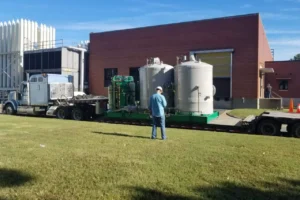
Hull sections that are tall and heavy would sit in the low well of a double drop or a removable gooseneck trailer. An RGN’s detachable front makes a ramp, which helps with pieces moved on rollers or skids rather than lifted by crane. The well is short, about 24 to 29 ft, so module length becomes a design limit.
Modular trailers and SPMTs for the biggest pieces
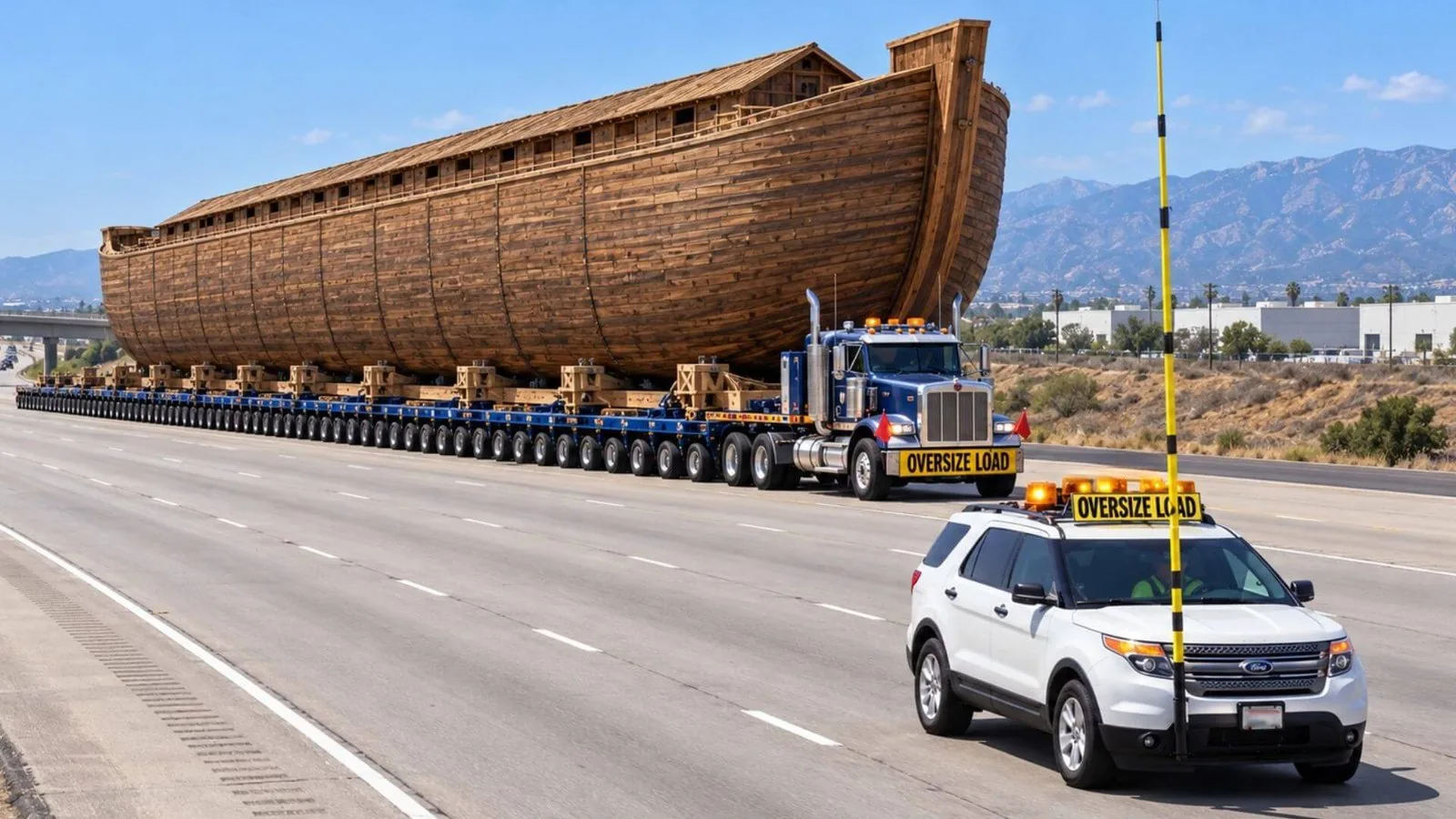
Multi-axle modular trailers and self-propelled modular transporters (SPMTs) spread very heavy loads across many axle lines. They are used for bridge spans, refinery vessels, and other pieces too big for conventional trailers. A section as wide as the Ark’s hull would likely move this way over a short, closed route, such as from a dock to a nearby assembly site.
Our heavy haul and oversized freight page explains how IZ Freight coordinates RGN, lowboy, and step deck moves in Southern California.
Planning the Route Out of the Port and Across Southern California
An oversize route in Southern California is planned around permits, curfews, overpasses, and grades before a truck is dispatched. For the Ark, the route survey would take longer than some of the moves themselves.
Port staging and drayage
Modules arriving at San Pedro Bay would need a terminal appointment, room to stage on or near the dock, and a crane plan for each lift. Pieces that can travel legally would leave first, while permitted pieces wait for their travel window. Our port drayage page covers how IZ Freight plans flat rack and breakbulk pulls out of the Ports of Los Angeles and Long Beach.
Caltrans and local permits
Caltrans Transportation Permits covers oversize and overweight loads on the State Highway System. The largest loads, over 15 ft wide, 17 ft high, or 135 ft long, fall under variance permits with extra review. City and county streets, including the last miles to a yard, can need separate local permits. Each permit lists the approved route, dimensions, and conditions, and the driver has to follow it.
Los Angeles curfews and holiday rules
The Caltrans Transportation Permits Manual bars permitted movement inside the Los Angeles restricted area from 6 to 9 a.m. and 3 to 6 p.m. on weekdays, and holiday rules restrict travel for loads that need pilot cars. Very wide loads can require California Highway Patrol escorts, and CHP and Caltrans then set the travel hours. We walked through one holiday example in our post on Los Angeles Thanksgiving oversize load restrictions.
Overpasses, power lines, and rail crossings
Los Angeles freeways are lined with overpasses, sign structures, and interchanges, and each one has its own clearance. Caltrans even lists two spots on Route 110 near downtown Los Angeles with clearances of 13 ft 5 in and 13 ft 6 in, below the state’s 14 ft height limit.
A route survey checks vertical clearance, bridge weight ratings, construction zones, tight turns, rail crossings where a low trailer could ground out, and overhead power lines that utilities may need to raise.
The Grapevine and Cajon Pass
Heading inland or north means long climbs. Interstate 15 over Cajon Pass toward the high desert and Interstate 5 over the Grapevine both have sustained grades that affect speed, braking, and which tractor can pull a heavy load. Permitted routes, wind, and seasonal weather all go into the timing.
Project Cargo Logistics Takes More Than a Broker and a Truck
A move this size would bring in a team of specialists, with a freight coordinator keeping their schedules lined up. The same roles appear, on a smaller scale, in many machinery moves.
- Riggers who prepare, lift, and set each module and handle rigger delivery appointments at both ends
- Crane companies that plan each lift, including ground conditions and crane access
- Engineers who design lift points, transport frames, and module weights
- Permit services that file state and local applications and track route changes
- Pilot cars and police escorts as the permits require
- Utility crews to lift or move overhead lines on the route
- Motor carriers and drivers who haul each load and secure it under the FMCSA cargo securement rules
- Project managers and freight coordinators who sequence the work and keep everyone informed
IZ Freight coordinates the freight side of moves like these: matching trailers, lining up carriers, and keeping the rigger, crane, and receiver on the same schedule. Authorized motor carriers do the hauling.
What Would It Cost to Transport Noah's Ark?
There is no honest number, because no one has drawings, weights, or a route. Project freight is priced from engineering drawings and a route plan, not from a rate per mile.
Cost would depend on:
- How many loads the Ark breaks into, and how many need permits
- Each module’s dimensions and weight
- Trailer types, axle counts, and tractors needed
- State and local permits, plus any route surveys and engineering reviews
- Pilot cars, police escorts, and utility work
- Cranes and rigging at the port, staging yards, and destination
- The lane, travel time windows, and how long pieces wait for permits
The same factors set the price for a single oversized machine, just with fewer loads and fewer people.
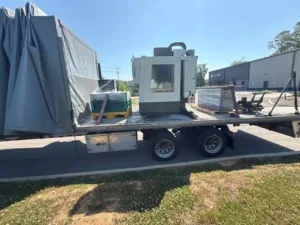
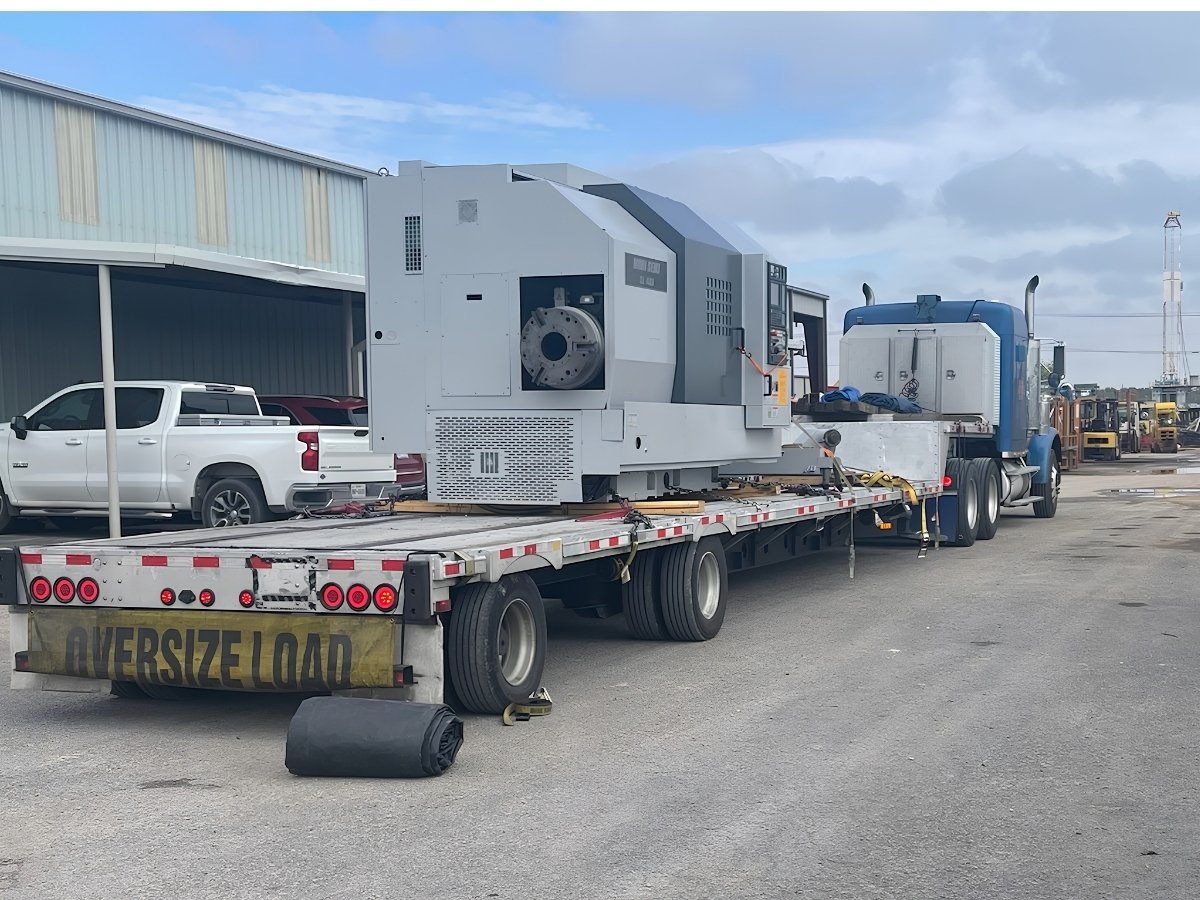 Illustration: real freight, same questions. A machining center on a step deck still starts with dimensions, weight, lift points, and the loading plan.
The Same Questions Apply to Your Machinery
Most freight is not 300 cubits long, but the planning steps stay the same. Whether you are shipping a CNC machine, a press brake, an injection molding machine, a generator, a transformer, construction equipment, a production line, or a fabricated structure, the first conversation covers:
- What are the length, width, height, and weight of each piece, measured, not estimated?
- Where are the lift points, and what lifts it at pickup and at delivery?
- Does any piece go past legal width, height, or weight, and does it need a permit?
- Can parts be removed or shipped separately to bring the main piece under the limits?
- Can the truck reach the pickup and delivery sites, and where will it stage?
- Does the job need riggers, a crane, or a delivery appointment with a set time?
- Which trailer fits best: flatbed, step deck, double drop, RGN, or something larger?
For machine-specific planning, see our CNC machinery transport page.
What to Send for an Oversized Freight Quote
Give us the details that decide trailer, permits, and route. Drawings and photos help as much as numbers.
- Pickup and delivery city and location type (port, yard, plant, jobsite)
- Length, width, height, and weight of every piece
- Photos, drawings, or spec sheets showing lift points and anything that sticks out
- Loading and unloading method, and who provides the crane, forklift, or riggers
- Site access notes: gates, overhead wires, tight turns, and delivery hours
- Target pickup and delivery dates, and any appointment requirements
Noah's Ark and Oversized Freight FAQs
Could Noah's Ark fit on a truck?
No. At 75 to 86 ft wide and 45 to 52 ft tall, the Ark would be many times wider and taller than California’s 8 ft 6 in width and 14 ft height limits, and no one knows its weight. To transport Noah’s Ark over land today, you would have to take it apart into modules or move it on engineered modular transporters over a closed, surveyed route.
How big was Noah's Ark in feet?
Genesis 6:15 gives 300 cubits long, 50 wide, and 30 high. With an 18 inch cubit that is about 450 x 75 x 45 ft. With the Egyptian royal cubit of about 20.6 inches it is roughly 515 x 86 x 52 ft, close to ten 53 ft trailers end to end.
When does a load need an oversize permit in California?
Caltrans issues transportation permits for loads on the State Highway System that go past the legal limits, including more than 8 ft 6 in wide, more than 14 ft high, or more than 80,000 lb. Cities and counties issue their own permits for local streets, so many moves need more than one.
What trailer do you use for oversized machinery?
It depends on height, weight, length, and how the piece loads. Flatbeds suit freight that stays within legal height, step decks and double drops give extra height clearance, and RGNs let equipment be driven or skidded on from the front. Very heavy or very large pieces may need multi-axle or modular trailers.
Why is Noah's Ark in the news in 2026?
An international team led by Turkey’s Sivas Cumhuriyet University finished a summer field season at the Durupinar formation near Mount Ararat, using ground-penetrating radar and core samples. Lab analysis is still underway, the researchers have not confirmed that the site is the Ark, and earlier geological studies described it as a natural formation.
What should I send IZ Freight for an oversized freight quote?
Send the pickup and delivery locations, length, width, height, and weight of each piece, photos or drawings, how it loads and unloads, and your target dates. For machinery, include lift points and any parts that ship separately.
Helpful Pages for Planning This Shipment
Your Shipment Probably Isn't 300 Cubits Long
But if you are moving machinery, oversized equipment, or freight that needs more planning than finding a truck, IZ Freight can help you plan it. Send the origin, destination, dimensions, weight, and loading requirements, and we will match the trailer, permits, and route to your freight.
Request an Oversized Freight Quote
Prefer to text? Reach IZ Freight at (541) 291-4947.