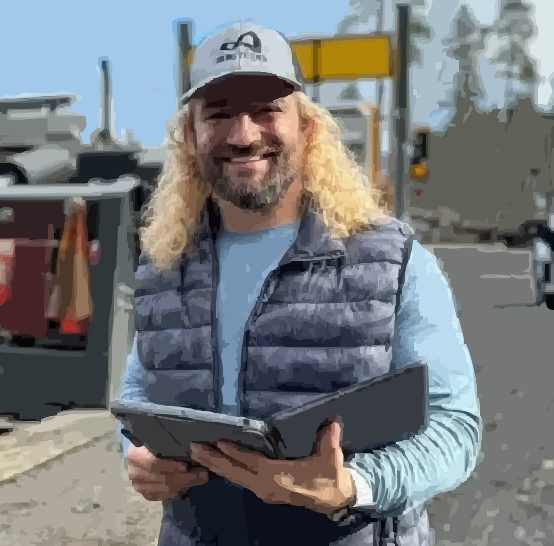
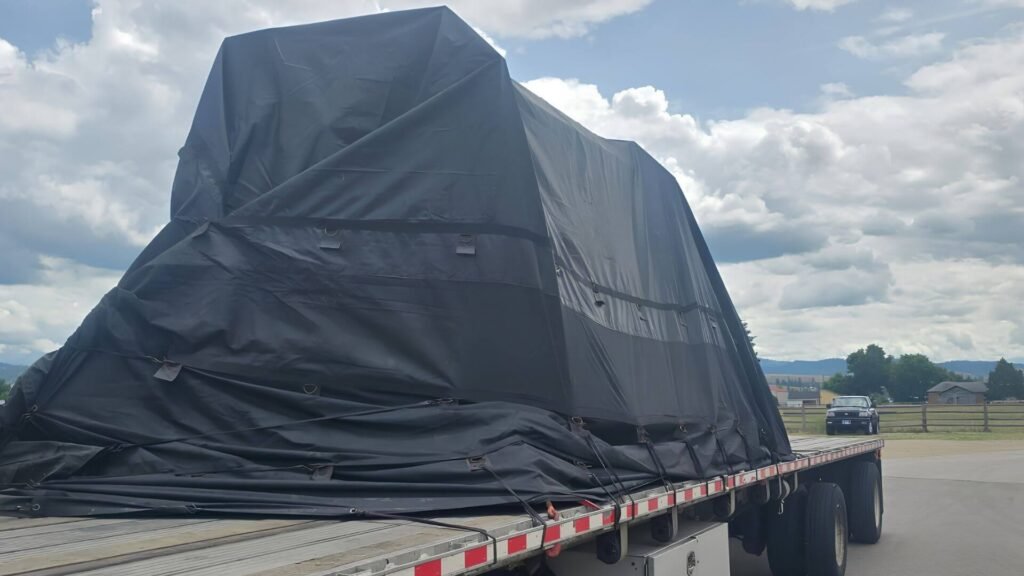
CNC press brake transport from Los Angeles requires the trailer, crane or rigging plan, securement system, weather protection, route, and receiving conditions to work together. This featured shipment shows how a large press brake was loaded onto an open-deck trailer, secured, fully tarped, and prepared for interstate transportation to Houston, Texas.
For Southern California manufacturers, fabrication shops, machinery dealers, auction buyers, and plant-relocation teams, the lesson is simple: the transportation plan should be built around the actual machine and both facilities before the truck arrives.
Why CNC Press Brakes Need Specialized Transport Planning
A CNC press brake is a concentrated industrial load with a tall profile, valuable controls, hydraulic components, finished surfaces, and limited places where lifting or securement may be appropriate. Those characteristics make accurate specifications and site planning essential.
Before quoting or dispatching a truck, the shipper should provide the manufacturer and model, verified shipping weight, overall transport dimensions, approved lifting information, center-of-gravity information when available, photos, cargo value, and loading conditions at both ends.
- Confirm the machine is disconnected and prepared by the responsible machinery team.
- Identify loose tooling, foot pedals, guards, electrical cabinets, and accessories that must be secured or shipped separately.
- Verify crane, forklift, rigging, dock, and ground-loading requirements.
- Measure the machine in its actual shipping configuration, not from a catalog photo.
- Confirm the receiving facility has the space, personnel, and equipment needed to unload.
Step One: Coordinate the Crane and Loading Area
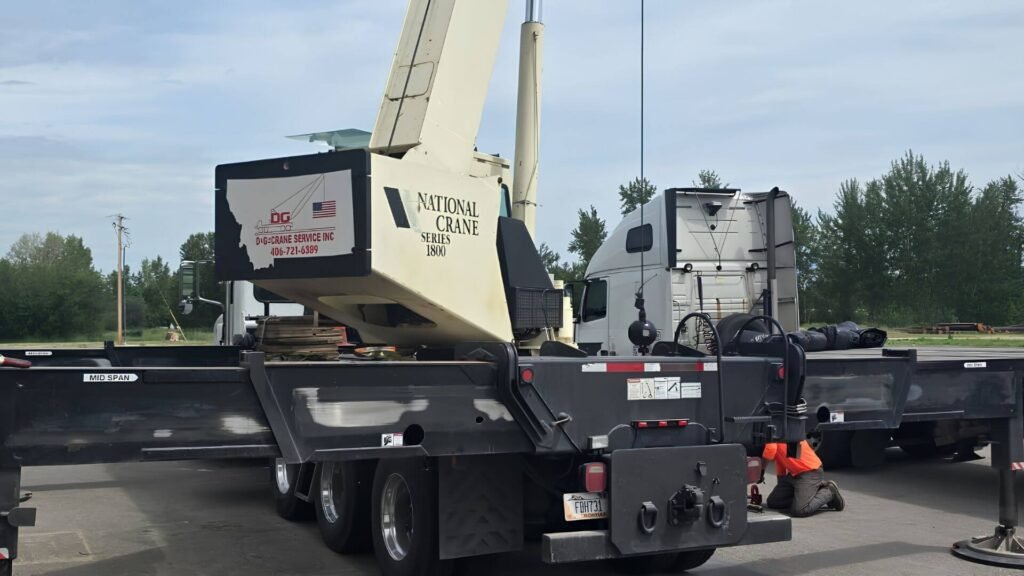
The loading area must support the crane, trailer, rigging operation, and safe movement of personnel. The qualified parties performing the lift determine the crane setup, rigging configuration, lifting points, capacity, and placement based on the machine and site.
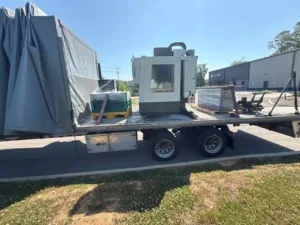
In this shipment, the crane and open-deck trailer were positioned together so the press brake could be transferred directly from the facility to the trailer. That avoided unnecessary handling and allowed the machine to be placed for weight distribution and securement access.
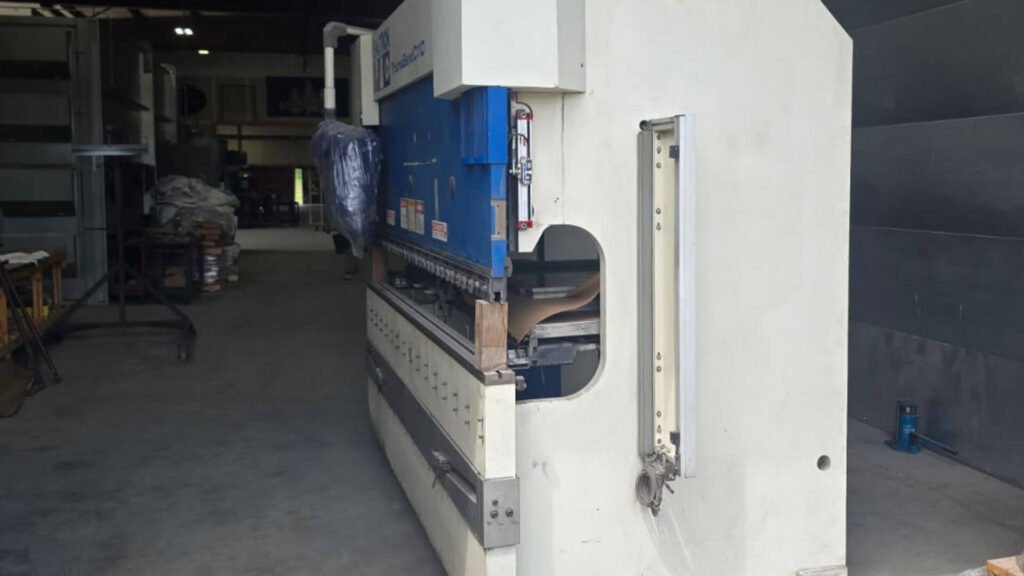
Step Two: Match the Press Brake to the Trailer
Trailer selection depends on the verified machine weight, footprint, loaded height, loading method, axle distribution, securement access, route, and weather-protection plan. A flatbed may work for one press brake while a step deck or lower-profile configuration is better for another.
| Trailer | Possible fit | Primary planning concern |
|---|---|---|
| Flatbed | Legal-height machines with crane or forklift loading | Loaded height, deck capacity, weight distribution, and tarp clearance |
| Step deck | Taller machines needing a lower main deck | Machine placement, deck transition, footprint, and securement geometry |
| Low-profile or specialized open deck | Large, tall, heavy, or unusually configured machines | Equipment availability, axle loading, route review, and permits when applicable |
The machine should be positioned under the carrier’s loading and securement plan with adequate deck support and access to suitable structural attachment areas. Trailer selection must be confirmed from shipment-specific information rather than assumed from the commodity name alone.
Step Three: Build the Securement System Around the Machine
Cargo securement must control movement during normal transportation conditions without damaging the machine. The complete system may include rated chains, binders, web tiedowns, blocking, dunnage, and other components selected for the specific press brake and trailer.
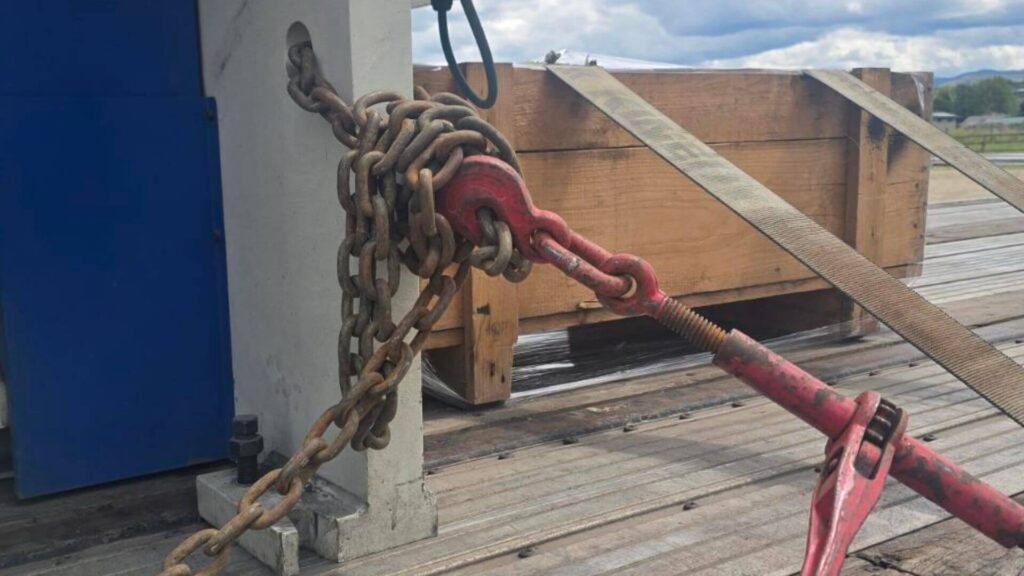
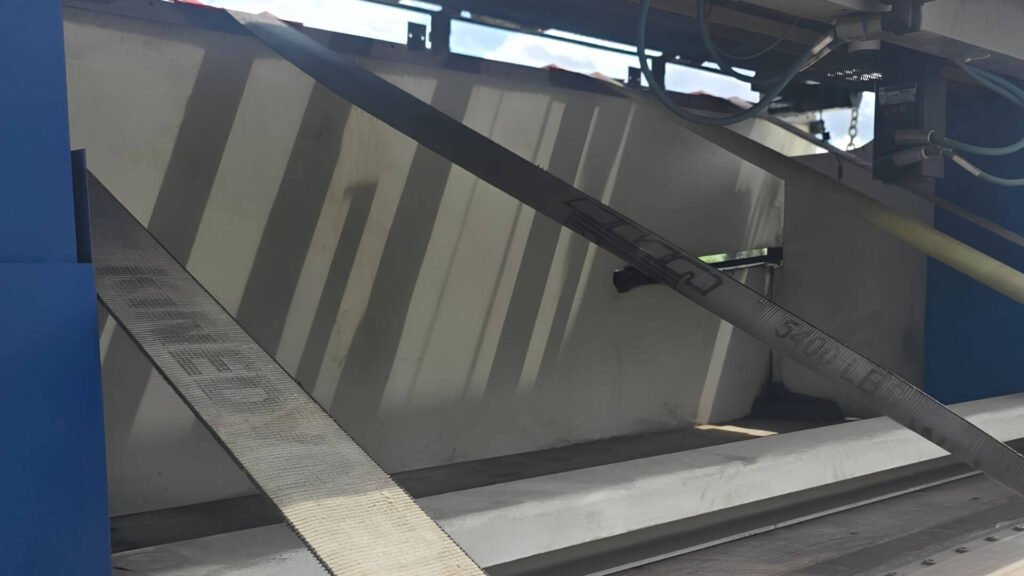
The photos from this move show securement applied at multiple locations around the machine. Close-up documentation is valuable because it records the attachment areas, tensioning devices, deck contact, and condition of the system before tarping covers the load.
- Use suitable structural attachment locations and protect controls, covers, hoses, wiring, and finished surfaces.
- Confirm every chain, binder, web tiedown, anchor point, and connecting component is suitable and in serviceable condition.
- Use edge protection where a tiedown could be cut or abraded.
- Account for forward, rearward, lateral, and vertical forces in the complete arrangement.
- Document the finished securement before weather protection is installed.
Why Securement Close-Ups Matter
A wide photo proves that the machine was on the trailer, but detailed photos show how the load was restrained. They help the transportation team review attachment points, binder positions, tiedown paths, clearance from delicate components, and areas that will disappear beneath the tarp.
Federal cargo-securement rules require cargo on a commercial motor vehicle to be secured against shifting or falling. They also address tiedown condition, working load limits, and edge protection. The carrier remains responsible for applying the rules to the actual load and inspecting the securement as required.
Step Four: Inspect the Load Before Tarping
The open-deck inspection is the last opportunity to see the entire machine and securement system clearly. The driver and responsible loading parties should verify the machine position, deck contact, tiedown condition and tension, loose components, loaded dimensions, and clearance around vulnerable surfaces.
Photos should be taken before the tarp is installed. If a question arises later, those images provide a record of the machine, trailer, and visible securement at origin.
Step Five: Protect the CNC Press Brake With a Full Tarp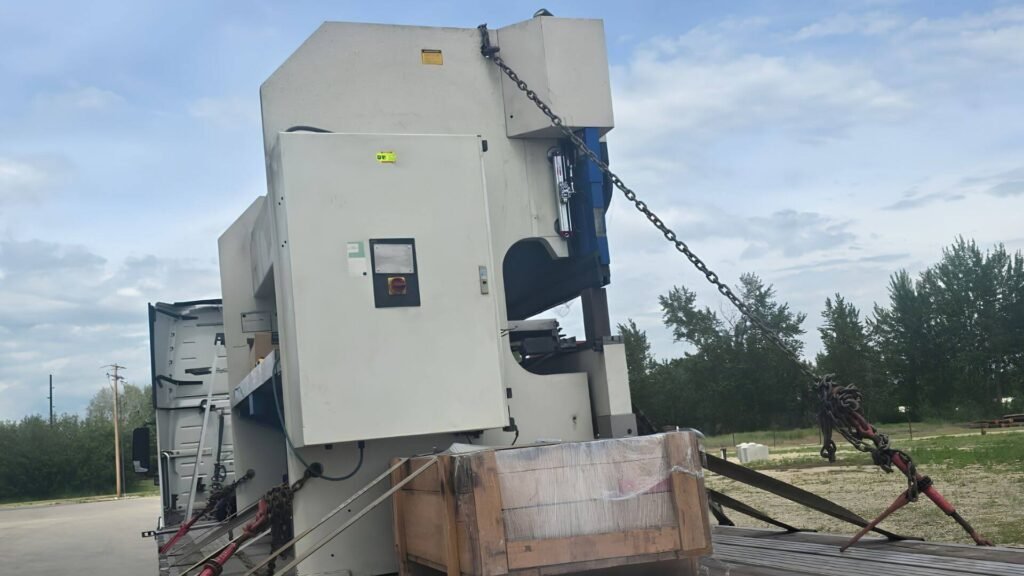
The tarp protects sensitive machinery from rain, road spray, dust, and debris, but it does not replace primary cargo securement. The machine must be secured first and the weather-protection system added afterward.
Before covering the machine, protect sharp corners and surfaces that could cut the tarp or suffer abrasion. The tarp should be shaped to reduce water pooling, drawn tight enough to control movement, and secured without relying on delicate machine components.
This load received full coverage before departure for Houston. A final walkaround should confirm that excess tarp material is controlled, fastening points are secure, lights and required equipment remain visible, and the finished profile is ready for the planned route.
Planning a Los Angeles to Houston Machinery Shipment
A Southern California to Texas machinery move combines local pickup constraints with a long interstate route. The plan may need to address industrial-site access, crane timing, California traffic, driver scheduling, weather exposure, fuel stops, route restrictions, and the Houston receiving appointment.
If the loaded dimensions or weights exceed legal limits, permits and route review may be required in each affected jurisdiction. Caltrans issues transportation permits for qualifying oversize or overweight moves on the California State Highway System, while the complete route and final loaded configuration determine what applies.
What to Send for a CNC Press Brake Shipping Quote
A quote becomes more reliable when it is based on verified machine and site information. Send these details before the pickup date is committed.
- Pickup and delivery addresses, contacts, hours, and requested dates
- Manufacturer, model, verified weight, and transport dimensions
- Machine data plate and photos from every side
- Loading and unloading method, including crane or rigger information
- Known lifting points, securement areas, center of gravity, and manufacturer instructions
- Loose tooling, accessories, hydraulic or electrical preparation, and weather-protection requirements
- Declared cargo value and any written request for special coverage review
- Gate, street, overhead, ground, dock, and appointment restrictions at both facilities
CNC Press Brake Transport FAQ
These are the most common planning questions for Los Angeles press brake shipments.